Just got an email from Andre Assis announcing his new book: “Coulomb’s Memoirs on Torsion, Electricity, and Magnetism Translated into English”.
3 Likes
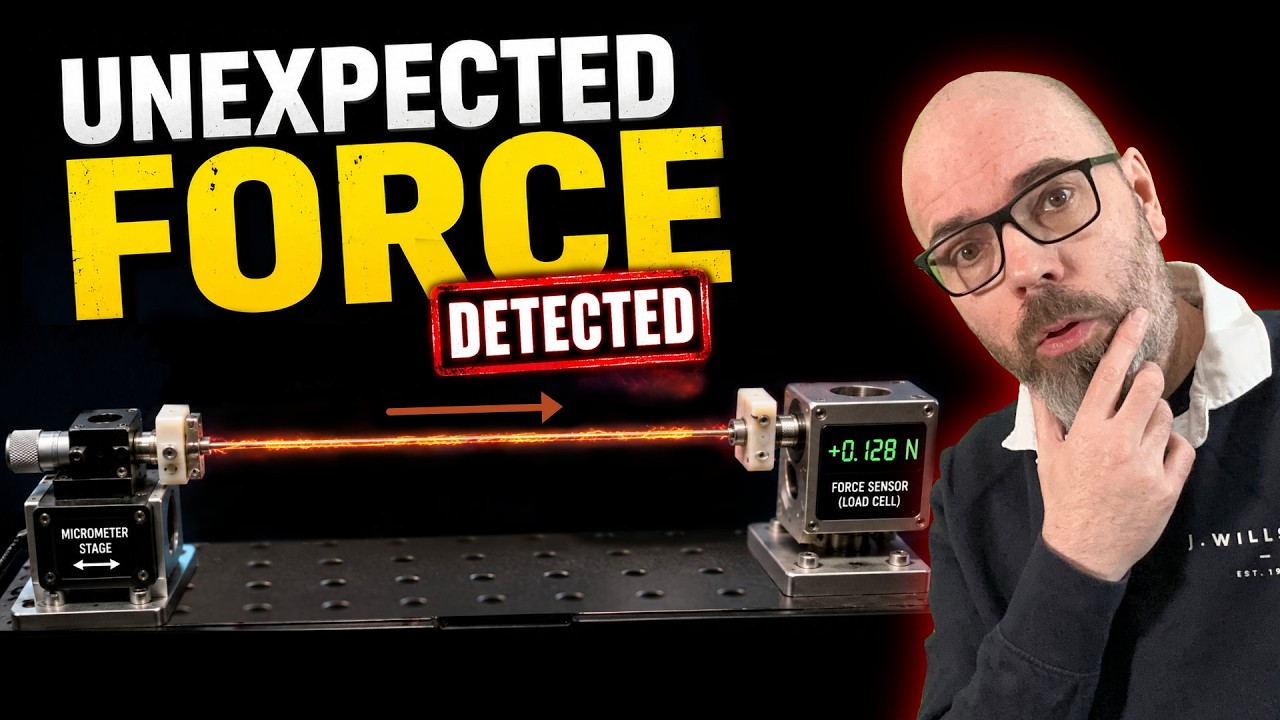
From a colleague with whom I shared that video:
I’m very familiar with this issue. I have carried out similar experiments years ago. So I know that the Lorentz force should only be used under certain narrow boundary conditions. Declaring it to be a fundamental law of nature is the starting point for all the ontological problems in modern physics. What Graneau and Assis do not know is that the Maxwell equations are correct nonetheless. The Maxwell equations can, in fact, be interpreted in various ways. The simplest way to derive the correct force law is to use the model of two point charges moving very slowly relative to each other. In the rest frame of the test charge, the magnetic field has no effect, and here we have only F = q*E. If this force is transformed into another reference frame via a Galilean transformation - for example, into the reference frame of the field-generating charge (as must be possible in Newtonian mechanics, since the charges move very slowly and the Lorentz transformation must converge to the Galilean transformation in the low-speed limit!) - one finds that the force has the same form in any frame and is depending on the retarded relative velocity, the retarded relative acceleration and the retarded distance vector. Assuming now that the force on the test charge is generated not just by a single point charge, but by a closed circuit with direct current, one arrives at the Lorentz force law.
This means that the Lorentz force can be derived from the full Maxwell equations under certain assumptions. Crucially, the Lorentz force can only be derived if the displacement current in the fourth Maxwell equation is not neglected. The simplified Maxwell equations require the Lorentz force as an accompanying auxiliary equation. The conclusion is that the full Maxwell equations are equivalent to the quasi-static Maxwell equations plus the Lorentz force formula, provided that quasi-static conditions are assumed.
Unfortunately, physics decided a long time ago to elevate the quasi-static Lorentz force law (magnetostatics) to a universally valid law (completely ad-hoc and against experimental proof) and to derive many theories and hypotheses from it. Consequently, the theories derived from the incorrectly generalized magnetostatics are also flawed. A prime example is the concept of the free-space EM wave transporting energy and momentum. Many physicists believe that in an EM wave, the electric field induces a magnetic field, which in turn induces an electric field, and so on. But this is wrong. Oleg Jefimenko proved using Maxwell’s equations that the E-field and the B-field always depend causally only on the source of the field. In other words, the E- and B-fields are causally independent of each other. This has enormous consequences, such as classical EM waves possessing no momentum. Therefore, I know that light cannot be a classical EM wave, but rather a form of corpuscular radiation (where the observed radiation pressure is caused by the momentum of the particles), and that photons (the particles) are flying Hertzian dipoles. The oscillating matter of the Hertzian dipole transports the energy and the momentum. The wave surrounding the Hertzian dipole accounts for the wave aspect (de Broglie’s double solution theory).
To cut a long story short: Maxwell’s equations lead actually to a very classical mechanics if the Lorentz force is not assumed ad-hoc, but derived while respecting the boundary conditions. One then realizes that the electromagnetic force is fully compatible with Newtonian mechanics. This applies in particular to retarded forces and thus force waves. Today’s physics is very far removed from this view of nature. Most physicists today even assume that matter does not exist and that, instead, everything is a wave. Many of the ontological problems facing physics today disappear however when Maxwell’s equations are interpreted in the Newtonian sense.
1 Like