# Dreams of a Soviet Internet
**URL:** https://scanalyst.fourmilab.ch/t/dreams-of-a-soviet-internet/3067
**Category:** Continuity
**Tags:** central-planning, soviet-union, internet, computer-networking
**Created:** [19 April 2023 13:03 UTC](https://scanalyst.fourmilab.ch/t/dreams-of-a-soviet-internet/3067 "2023-04-19T13:03:50Z")
**Posts on this page:** 2
**Page:** 1
### Author:  [@johnwalker](https://scanalyst.fourmilab.ch/u/johnwalker)
#### Post date: [19 April 2023 13:03 UTC](https://scanalyst.fourmilab.ch/t/dreams-of-a-soviet-internet/3067/1 "2023-04-19T13:03:50Z")
[ ](https://www.youtube.com/watch?v=cLOD5f-q0as)
Computer scientists and engineers in the Soviet Union were enthusiastic that widely distributed computing resources and networking could make a centrally-planned economy actually _work_ and achieve the dreams of abundance of Marx and Lenin, as opposed to the Soviet experience of chronic shortages, waste, and shoddy quality. Unfortunately, the Soviet system was unable to produce the equipment that would have been required to see if that very system could have been improved by its deployment.
For a quirky blend of fact and fiction chronicling the era of great optimism for “cybernetics” ushering in a golden age of communism, see Francis Spufford’s 2012 book _[Red Plenty](https://www.amazon.com/dp/1555976042/?tag=fourmilabwwwfour)_.
---
### Author:  [@eggspurt](https://scanalyst.fourmilab.ch/u/eggspurt)
#### Post date: [22 April 2023 15:45 UTC](https://scanalyst.fourmilab.ch/t/dreams-of-a-soviet-internet/3067/2 "2023-04-22T15:45:20Z")
On this note I should mention the Chilean Project Cybersyn:
> [Cybernetics](https://en.wikipedia.org/wiki/Cybernetics) began to become popular around WWII. As humans developed new kinds of machines, they became interested in developing systems for controlling those machines. Cybernetics looks at how to design intelligent, self-correcting systems.
>
> In England, in the 1960s, a business consultant named [Stafford Beer](https://en.wikipedia.org/wiki/Stafford_Beer) was applying concepts of cybernetics to business management. He believed a business could be thought of as an intelligent system. If the goal of a business is to sell more product, or work more efficiently, one could (using the principles of cybernetics) design the system to work toward that goal.
>
> [Fernando Flores](https://en.wikipedia.org/wiki/Fernando_Flores), a Chilean advisor to Allende, thought that Stafford Beer could use Cybernetics to help model and manage Chile’s economy, and Beer was thrilled at the chance to apply his ideas on such a grand scale. Beer arrived in Chile in 1971 to begin on this project, which they called “Cybersyn.”
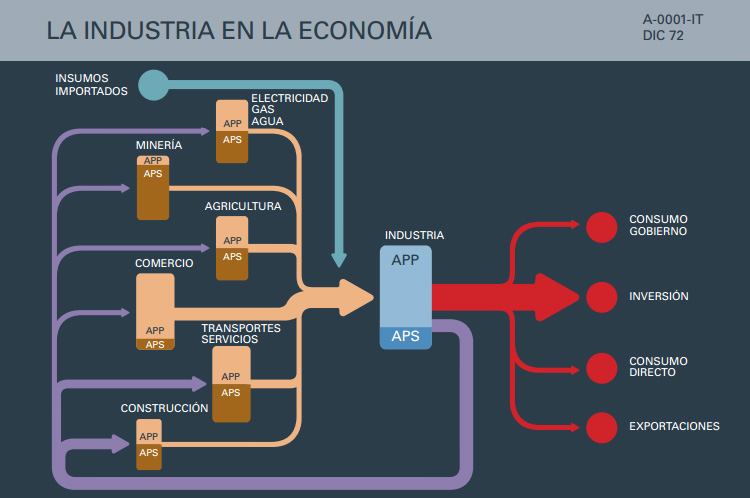
Flores was later Terry Winograd’s coauthor, and Terry advised the Google founders when they created the first prototype of the search engine. These ideas run deep.
More in this excellent article (and [this one](https://www.newyorker.com/magazine/2014/10/13/planning-machine) also):
> **[Project Cybersyn - 99% Invisible](https://99percentinvisible.org/episode/project-cybersyn/)**
>
> On September 11, 1973, a military junta violently took control of Chile, which was led at the time by President Salvador Allende. Allende had become president in a free and democratic election. After the military coup, General Augusto Pinochet...