# Hafnium in the Lab
**URL:** https://scanalyst.fourmilab.ch/t/hafnium-in-the-lab/3168
**Category:** Tracking with Closeups
**Tags:** chemistry, chemical-elements, neutron-capture
**Created:** [14 May 2023 12:30 UTC](https://scanalyst.fourmilab.ch/t/hafnium-in-the-lab/3168 "2023-05-14T12:30:42Z")
**Posts on this page:** 4
**Page:** 1
### Author:  [@johnwalker](https://scanalyst.fourmilab.ch/u/johnwalker)
#### Post date: [14 May 2023 12:30 UTC](https://scanalyst.fourmilab.ch/t/hafnium-in-the-lab/3168/1 "2023-05-14T12:30:42Z")
[ ](https://www.youtube.com/watch?v=Qb9f5uBKJhg)
The existence of [hafnium](https://en.wikipedia.org/wiki/Hafnium) was predicted as “missing element 72” in Mendeleev’s periodic table in 1869, but not isolated until 1923. It is chemically almost identical to zirconium (element 40), which appears above it in the periodic table, and, when found in ore with zirconium, is almost impossible to separate from zirconium by chemical means. It is mostly refined today by [solvent extraction](https://en.wikipedia.org/wiki/Liquid%E2%80%93liquid_extraction), using the difference in solubility of the two elements to separate them.
Hafnium has been a major headache for nuclear engineers. While zirconium is an ideal material for cladding nuclear fuel rods, as it has a very low rate of neutron absorption (capture cross section) and, mechanical strength, and resistance to high temperatures, hafnium has a very large neutron capture cross section and zirconium contaminated with hafnium is useless for reactor fuel rods. Consequently, zirconium must be purified by extracting the hafnium admixture, and this refining process is the source of most hafnium produced today.
Hafnium compounds have found application as insulating material for transistor gates in integrated circuits of 45 nanometre and smaller geometry, as they reduce leakage when used as dielectric in these small devices.
The [hafnium-178m2 nuclear isomer](https://en.wikipedia.org/wiki/Hafnium_controversy) was at the centre of the _[Imaginary Weapons](https://www.fourmilab.ch/documents/reading_list/?book=505)_ kerfuffle of the early 2000s, when DARPA envisioned a hafnium isomer _nuclear hand grenade_ with a yield of two kilotons. How good’s your pitching arm?
---
### Author:  [@eggspurt](https://scanalyst.fourmilab.ch/u/eggspurt)
#### Post date: [16 May 2023 12:12 UTC](https://scanalyst.fourmilab.ch/t/hafnium-in-the-lab/3168/2 "2023-05-16T12:12:58Z")
When I was in the military, learning to throw a hand grenade, the sergeant was standing next to me with a big stick.
I asked him about the stick, and he told me (with a straight face) that it’s to hit my arm if I don’t throw the grenade. Apparently some soldiers lock up. If I were in his place, I’d use a shovel - far better for playing hand grenade hockey (Canadian roulette?)
---
### Author:  [@johnwalker](https://scanalyst.fourmilab.ch/u/johnwalker)
#### Post date: [16 May 2023 12:31 UTC](https://scanalyst.fourmilab.ch/t/hafnium-in-the-lab/3168/3 "2023-05-16T12:31:02Z")
> [@eggspurt](#):
>
> I asked him about the stick, and he told me (with a straight face) that it’s to hit my arm if I don’t throw the grenade.
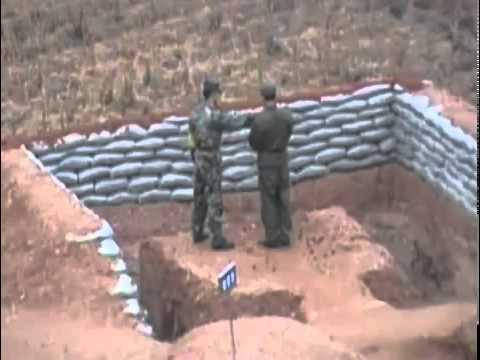
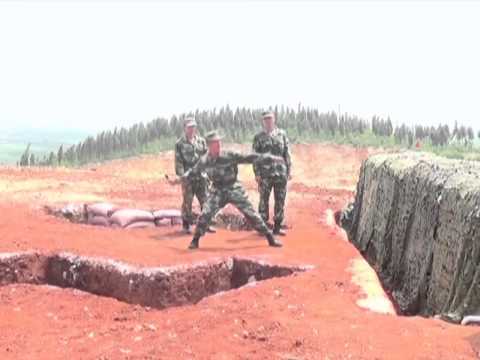
Here’s how they do it in China.
[ ](https://www.youtube.com/watch?v=x10eF7JrDic)
[ ](https://www.youtube.com/watch?v=gRAinYDsyfs)
---
### Author:  [@eggspurt](https://scanalyst.fourmilab.ch/u/eggspurt)
#### Post date: [16 May 2023 12:55 UTC](https://scanalyst.fourmilab.ch/t/hafnium-in-the-lab/3168/4 "2023-05-16T12:55:56Z")
If you’re interested in comparing these practices with the US ones, these are the guidelines for instructors from [US Army TC 3-23.30: GRENADES AND PYROTECHNIC SIGNALS](https://armypubs.army.mil/epubs/DR_pubs/DR_a/ARN37340-TC_3-23.30-001-WEB-3.pdf):
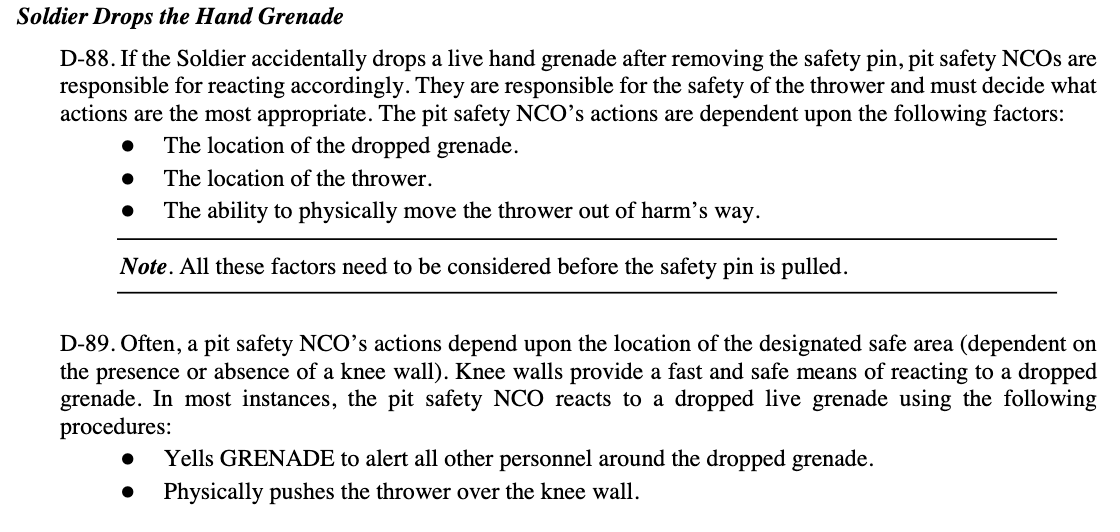
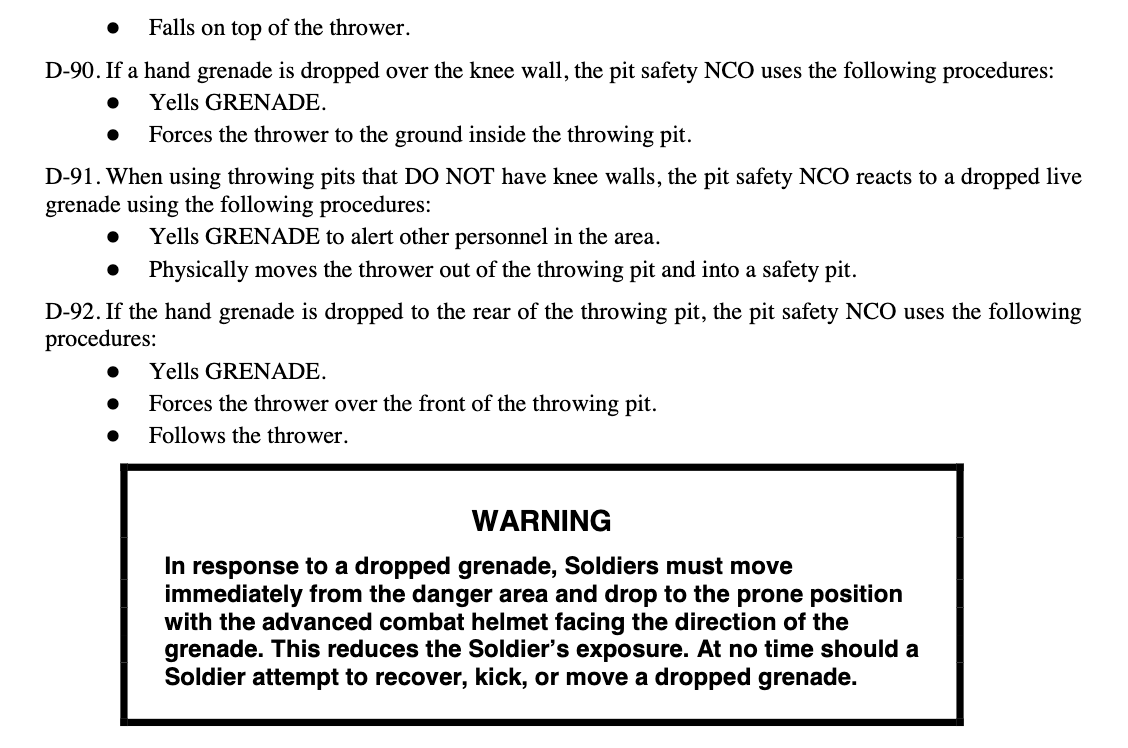
And that’s what a training range would look like: