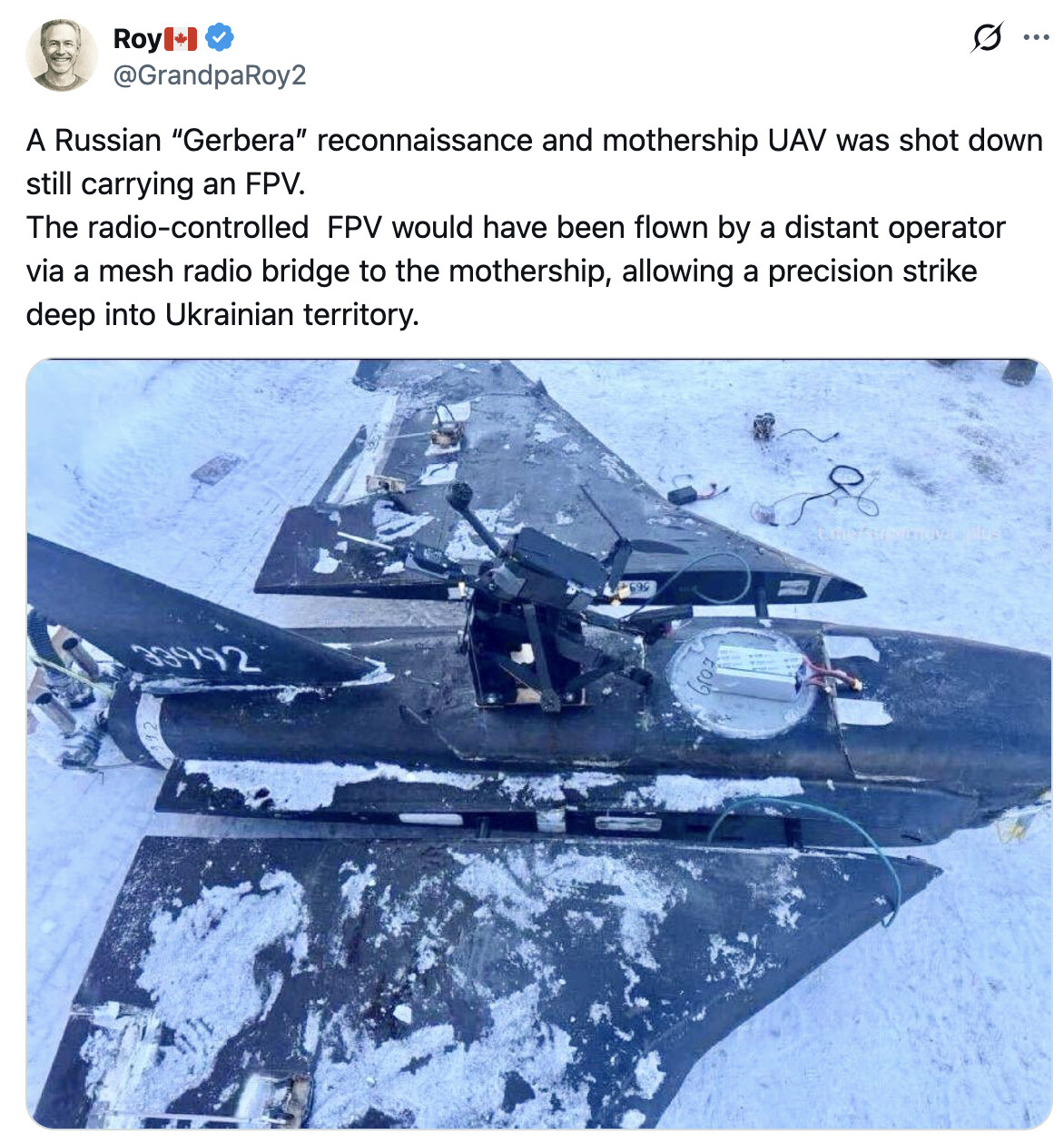
We hear only what the respective governments want us to hear. Drones are the current hot item. Truth of the matter is that the low-flying drones so often spoken of and shown in the RvU war are sensitive to electronic interference. They must be controlled by an electronic signal and so would be open to intrusion by same. High flying drones (like our Vipers), which cruise in the thousands of feet and carry a couple Hellfire missiles, are a different problem. Being large enough I presume they have a radar cross-section, so can be ID’d by IFF or some similar process.
There will be more development in this field. Small unit use is certainly a great field for their use, especially in the Scout formation; as an offensive or defensive weapon I would suspect their use will be more circumspect. Nations with few resources may look upon them as useful force extenders. More capable nations will probably develop them along different lines.
Maybe not. Cheap, low-flying drones could easily have a higher RCS. Larger drones such as those made by GA are stealth and have surprising low RCSs. The kind of small drones one sees in Ukraine war footage don’t seem to have anything like that.
“War is the remedy our enemies have chosen. Other simple remedies were within their choice. You know it and they know it, but they wanted war, and I say let us give them all they want; not a word of argument, not a sign of let up, no cave in till we are whipped or they are”
Security Guard: No help at all. Because it wasn’t just the weapons. At one point, they launched something—I don’t know how to describe it… it was like a very intense sound wave. Suddenly I felt like my head was exploding from the inside. We all started bleeding from the nose. Some were vomiting blood. We fell to the ground, unable to move.
🚨This account from a Venezuelan security guard loyal to Nicolás Maduro is absolutely chilling—and it explains a lot about why the tone across Latin America suddenly changed.
Security Guard: On the day of the operation, we didn't hear anything coming. We were on guard, but… pic.twitter.com/392mQuakYV
🚨I24 News in Israel is reporting that the Iranians are blocking Starlink technology - likely with assistance from Russia or China.@elonmuskhttps://t.co/R7OVaSJDjP
Iranian protesters thank Trump and Elon Musk for Starlink internet access
Despite the near-total internet blackout imposed by the authorities, Starlink equipment has made it possible for limited but crucial videos from inside Iran over the past two days to reach the outside… https://t.co/izSz1vVlmgpic.twitter.com/1z2vPgLnNR
Sorry but I don’t give a rat’s ass if those Iranians continue to be ruled by a religious wacko or by just a regular wacko. What happens in the Middle East stays in the Middle East.
“Cui stressed that Europe’s biggest security threat lies not outside, but within. Quoting a well-known Chinese saying, he said, “It is easy to defeat a bandit in the mountains, but hard to eliminate the bandit in one’s own heart.”
“If one’s understanding of security in the 21st century remains trapped in outdated frameworks, or even in ways of thinking rooted in the 19th century, how can genuine security be achieved, and how can one truly feel secure?” he asked.”
The intelligence expert and Sasha Ingber writes that that the U.S. has captured a device believed to be linked to Havana Syndrome.
She writes that 4 sources (including two familiar with U.S. special operations) have informed her that the U.S. acquired the weapon "a… pic.twitter.com/RE8D7CONQn
Yeah, it’s called Mass Hysteria. This ancient device dates back to the medieval period or perhaps even earlier. The more modern term is mass psychogenic illness (MPI). Maybe “intelligence expert” and Sasha Ingber is a sufferer.
Sound familiar? [from Grokipedia]
Common symptoms of mass psychogenic illness (MPI) encompass a spectrum of physical, sensory, and behavioral manifestations that suggest organic pathology but arise from psychological and social dynamics rather than verifiable physiological insults. In outbreaks classified as mass anxiety hysteria, prevalent symptoms include headache, dizziness, nausea, abdominal pain, generalized weakness, hyperventilation, and fainting or syncope.[2] These often emerge acutely, mimicking acute toxic exposures or infections, and are frequently accompanied by subjective distress such as shortness of breath or palpitations.