Here is Scott Manley’s more detailed look at the flight videos, including the apparent breakup of the upper stage before reaching the intended velocity.
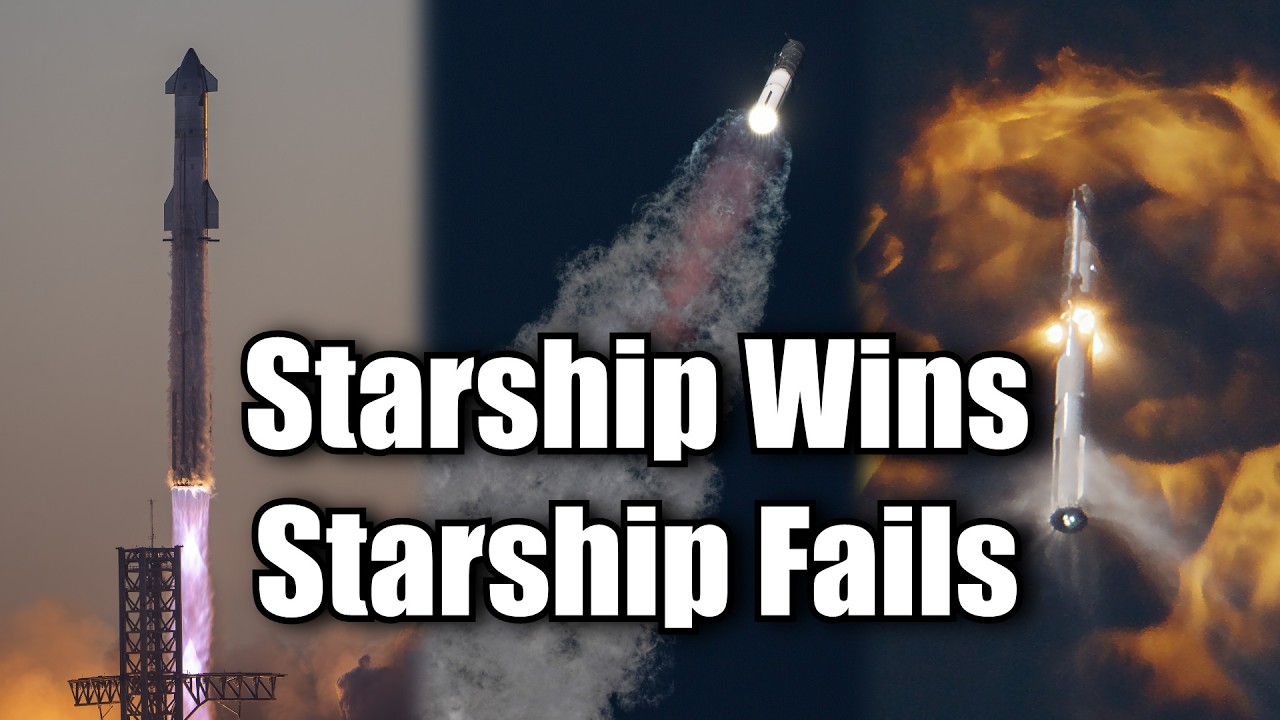
With regard to the dark plume and plume from the booster mentioned in comments #29 and #31 above, if you look at the close-up tracking shots of the booster toward the end of the video (starting around 10:00), it looks like there are two plumes, which I can almost convince myself are coming from around the top of the LOX tank on the near side and the methane tank on the far side. Now, there were regular reports during the first stage ascent that it was on a normal trajectory, which you wouldn’t expect if these were propellant leaks. Super Heavy is supposed to use autogenous propellant tank pressurisation, where pressure in the tanks as they are emptied is supplied by propellant heated by the engines which is routed back to the tank as a pressurant, avoiding the need for separate helium pressure bottles. (The Space Shuttle used the same system to maintain pressure in its External Tank during ascent.)
I wonder if the pressurisation system might be designed to generate more gas than is needed, use what’s required to maintain tank pressure, and dump the excess out the side, perhaps on opposite sides of the booster to avoid mixing. If so, that might explain the plumes on the sides of the booster and the black smoke trail on the side where excess methane was being dumped. Presumably excess oxygen wouldn’t leave a smoke trail.
Or, maybe I’m hallucinating something plausible, like GPT-4.