Looking for a good read? Here is a recommendation. I have an unusual approach to reviewing books. I review books I feel merit a review. Each review is an opportunity to recommend a book. If I do not think a book is worth reading, I find another book to review. You do not have to agree with everything every author has written (I do not), but the fiction I review is entertaining (and often thought-provoking) and the non-fiction contain ideas worth reading.
Book Review
King Cotton in Texas
Reviewed by Mark Lardas
October 11, 2026
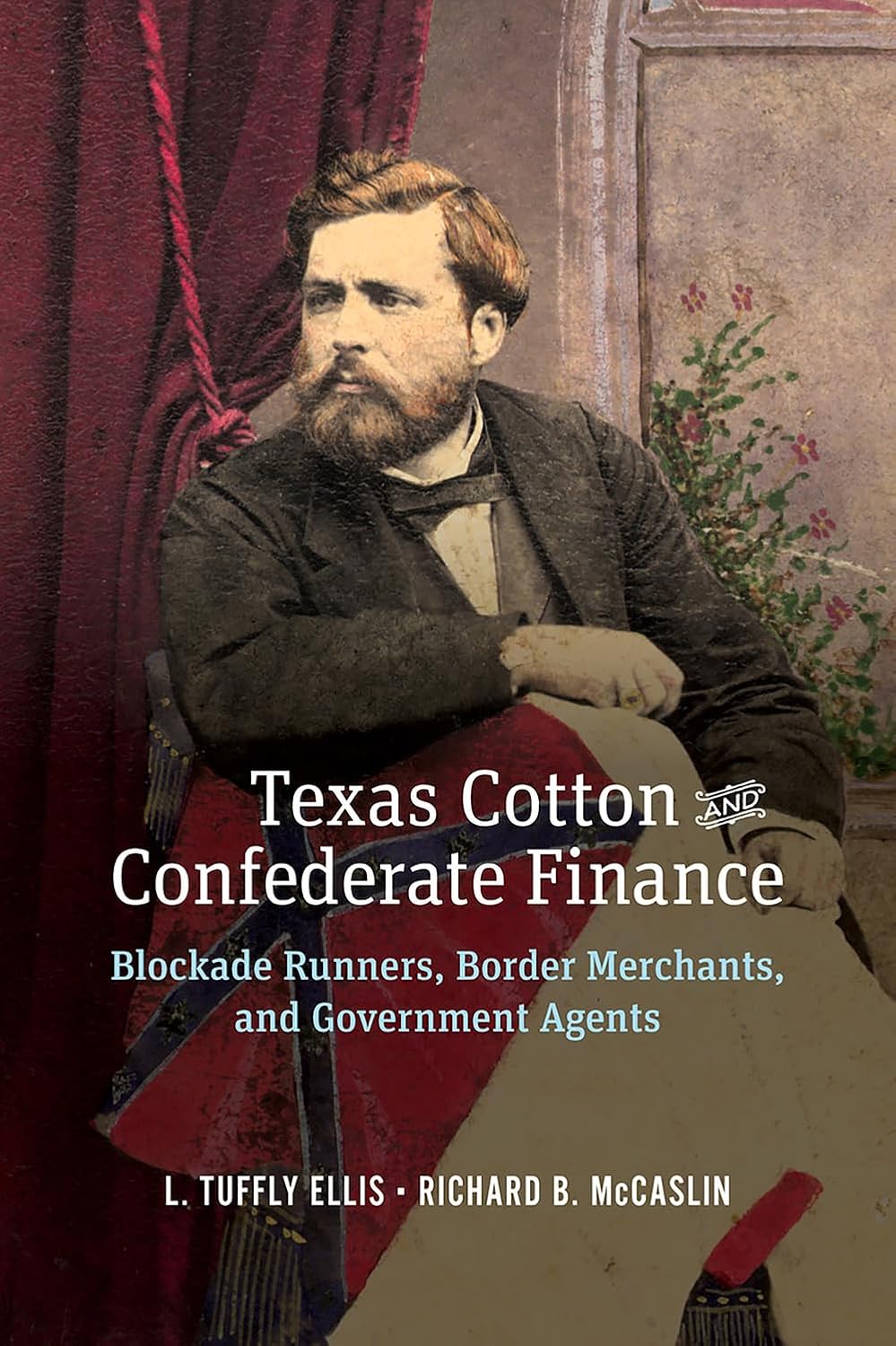
“Texas Cotton and Confederate Finance: Blockade Runners, Border Merchants, and Government Agents,” by L. Tuffly Ellis and Richard B. McCaslin, University of North Texas Press, October 2026, 464 pages, $34.95 (Hardcover)
For the Confederacy cotton was king. It was the engine through which they hoped to finance their war of independence from the United States. Texas was an important part of that ambition. It exported one-sixth the cotton exported by states making up the Confederacy in 1860. During the Civil War years that doubled. The only Confederate state bordering a neutral county, Texas exported roughly one-third of the cotton exported annually by the Confederacy.
“Texas Cotton and Confederate Finance: Blockade Runners, Border Merchants, and Government Agents,” by L. Tuffly Ellis and Richard B. McCaslin looks at cotton in Texas during the Civil War. It is an administrative history of the Confederacy’s efforts to sustain itself in the Trans-Mississippi District though Texas cotton.
It provides a fascinating and detailed look at virtually every aspect relating to Confederate efforts to monetize cotton for the Confederacy. The book opens by looking at the secession crisis, which triggered the American Civil War. This includes the role cotton played in triggering secession. It follows with deep dives exploring the blockade runners shipping the cotton out of Texas and the border merchants selling and buying the cotton.
Chapters examine the various Confederate efforts to regulate and tax this trade. The role played by the Texas State Military Board, Confederate agents appointed through Richmond, the Confederate Cotton Board and the Texas State Loan Agency are studied. These reveal the different organizations had overlapping responsibilities and frequently conflicting claims on the same cotton.
The Union invasions of Texas, Confederate impressment of cotton, and rules and regulations set by Jefferson Davis on the national level and by Edmund Kirby Smith commanding the Trans-Mississippi Departments are given study in individual chapters.
This history was started by L. Tuffly Ellis. Richard B. McCaslin, a graduate student under Ellis, finished the work after Eliss died, at Eliss’s request. The result is impressive and magisterial. No one previously attempted a similar study of Texas cotton and its impact on the Confederate war effort. The effort was complex. Yet these authors straightened the tangled strands its history, providing a coherent picture of what happened and why.
McCaslin feels the Confederate efforts were largely successful. Readers may come away feeling it was not nearly as successful as they could or should have been. “Texas Cotton and Confederate Finance“ shows a pattern of confusion and lost opportunity created by institutional infighting and a lack of clear direction.
Mark Lardas, an engineer, freelance writer, historian, and model-maker, lives in League City. His website is marklardas.com.