Back to anecdotes.
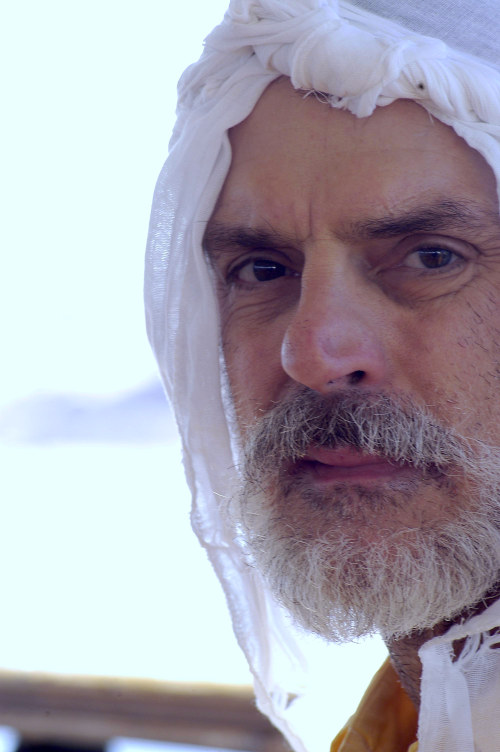
This picture of my dad, David F. Harris, MD, was taken in Egypt on a Nile cruise in 2006 with Morgan (my sister), Helen (my mom), and Harriet (my grandmother). His mother, Harriet Miller Harris, then in her 90s, had long wanted to visit Egypt.
Grandmother Harris had long been a member of the ARE (Association for Research and Enlightenment, A.R.E., founded by psychic Edgar Cayce), a benignly nutty group with an interest in the mysteries of ancient Egypt, advocating some wild theories. (The powerful and controversial, some would say egomaniacal, Dr. Zahi Hawass of the Egyptian Supreme Council of Antiquities has had a long association with the ARE. )
So that’s really just to explain why he’s wearing a badly-tied headscarf. He grew up in Doylestown, near Philadelphia, got an honors degree in physics from Dartmouth ('66), then an MD from Cornell (NYC, '70) where he also worked at nearby Rockefeller University and he met my mother in the 15th St. NYC Quaker Meeting (they married in 1970 at the Matinecock (Locust Valley, Long Island) Meeting), interned in Chicago (Passavant, now Northwestern Memorial Hospital), allowed himself to be drafted into the Army as a class"1.A.O." conscientious objector (would treat soldiers, but not fight), spent his 2-year internship at the Armed Forces Institute of Pathology at Walter Reed doing independent research in antiseptics, completing his service in 1972 with the rank of Major. I was born at Walter Reed in 1972.
We lived in College Park with his sisters Beth (Harriet Elizabeth (Harris) Lulie) and Renee (Maureen (Harris) Norman) and their husbands Ed Lulie, and Andrew G.W. Norman, all of whom were in law school. Our next door neighbor and long-time family friend was Peter Modley, later head of MASINT at the State Department. My babysitter was often Carol Bruch (then Bruch Meyers) who was clerking for Justice Douglas at the time, the first mom to be a Supreme Court clerk.
So many anecdotes to choose from …
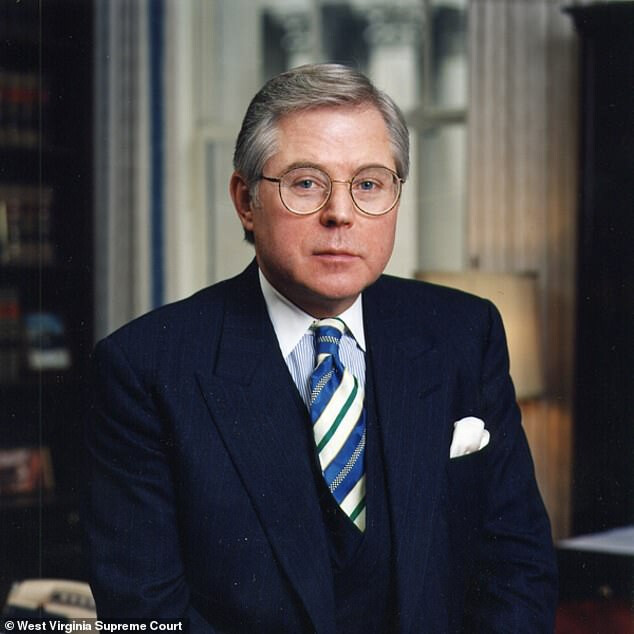
The one I set out to tell was about dad’s piercing gaze. He always looked like that, but some people found it intimidating, especially with him being 6’3". Dad was board-certified in clinical and anatomic pathology, but he also did at least a thousand forensic autopsies, mostly in central Kansas (where he was coroner for more than half the state in '79-'80) and Odessa, Texas ('80-'82). This included hundreds of homicide investigations, of course, and sometimes he’d have to testify in murder cases, which usually meant sitting in the courtroom through hours of trial. On more than one occasion, judges thought that dad merely looking at the defendant would prejudice the jury and expelled him from the court until called to testify.
Of course he also had to autopsy many drownings, decayed bodies and mummified remains which were often hard to identify. One technique was to take fingerprints off the inside of the skin, which requires cutting off the hand, pulling off the skin like a glove and turning it inside out, leaving a rather nasty-looking flayed hand. Now, these ugly bits weren’t thrown out, but kept in a big freezer, labeled, but the freezer filled up, some specimens got pushed off the rack and fell behind everything, then became embedded in accumulating ice deposits. At some point the ice got too thick and the janitor (yes, he was Black) was called upon to defrost the freezer. “AAAAA! AAAA! YOU PEOPLE ARE CRAZY!! I AIN’T NEVER COMIN’ BACK HERE NO MORE!”
One thing I can say about dad is that he always saved the best stories for after dinner. And he never brought work home.
The same wasn’t always true of my mother’s father, Enoch Dwight Staats, MD, of Ripley West Viginia. He started practice in the 1920s and was an old-fashioned general practitioner who handled every specialty himself by necessity. He did his own lab tests, made some of his own drugs, sometimes did major surgery on kitchen tables out in places inaccessible to cars for people who couldn’t afford five dollars a day for a hospital. If you couldn’t make it up the stairs to his office, you got a house call. If an autopsy was wanted, he’d generally do it at the funeral parlor. But once or twice, that wasn’t an option.
Which is how my kindergarten-age mom came to walk in on him dissecting a dead guy in the front hallway of their house. It didn’t bother her, particularly, she said: “it’s remarkable how the most boring-looking people have the most colorful insides”.

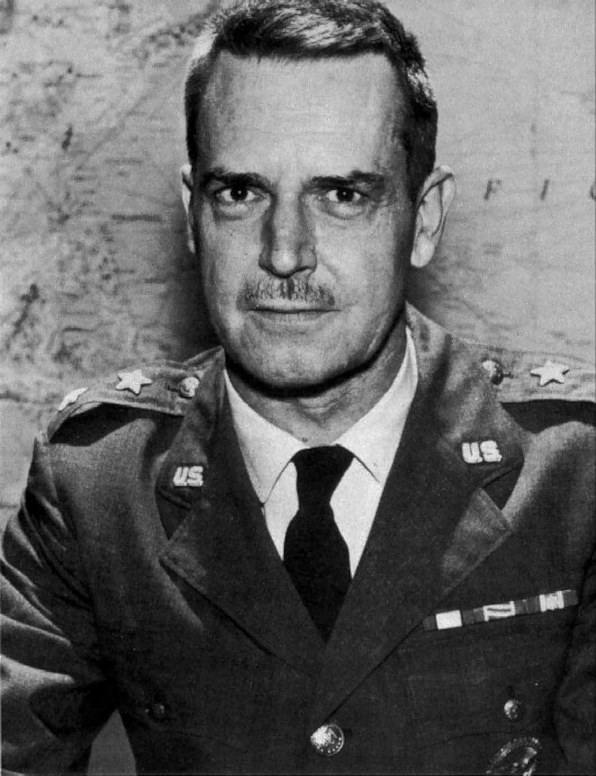
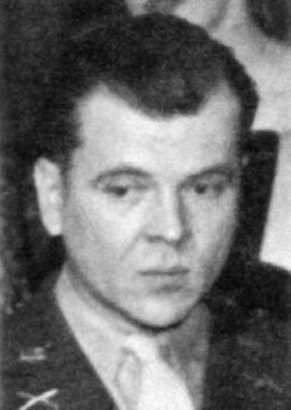 attended the funeral of
 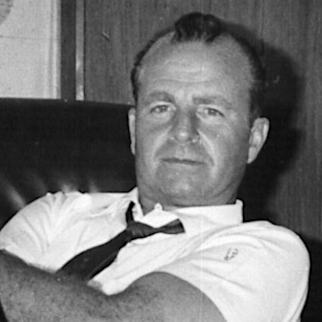 who was pretty much running the Vietnam War when he was killed in a helicopter crash. Vann’s story is told in Neil Sheehan’s