The Crazy Years

The story reads like a Radio Yerevan joke

The man said that he had been sharing his room with the bandaged mummy and considered it “a kind of spiritual girlfriend”.[…]

He explained that he kept “Juanita”, as he had nicknamed the mummy, in a box in his room, next to the TV. He added that it was owned by his father, without specifying how it had come into his father’s possession.

Experts said the body was between 600 and 800 years old and that it was that of an adult male rather than a woman, as the man who was discovered with it had assumed.

The mummified male is estimated to have been more than 45 years old at the time of his death and 1.51m tall (4ft 11in).

Here’s an oldie but goldie

Q: Is it true that Ivan Ivanovich Ivanov from Moscow won a car in a lottery?

A: In principle yes, but:

  1. it wasn’t Ivan Ivanovich Ivanov but Aleksander Aleksandrovich Aleksandrov;
  2. he is not from Moscow but from Odessa;
  3. it was not a car but a bicycle;
  4. he didn’t win it, but it was stolen from him.
6 Likes

How does iPhone charging compare to electric cars? In the post-fossil fuel future will you have to stop on trips and park until it’s a green charging time?

5 Likes

In the post-fossil fuel future, it’s quite likely that bad thinkers will not be allowed the privilege of driving.

Having an extra lever of control in terms of limiting access to the charging infrastructure will only make it easier to impose de-facto curfews with high granularity.

Good-thinkers are likely to have a very flexible set of criteria to call out current thing bad thinking.

6 Likes

Hahaha, good. Bastards.

3 Likes

Bloody central bankers!

3 Likes

What could possibly go wrong?

https://wedocs.unep.org/bitstream/handle/20.500.11822/41903/one_atmosphere.pdf?sequence=3&isAllowed=y

2 Likes
9 Likes

A trilogy about the decay of the Pacific NW with emphasis on Portland as Hellscape is “A Great State”. It was written by a woman who escaped to Montana.

7 Likes

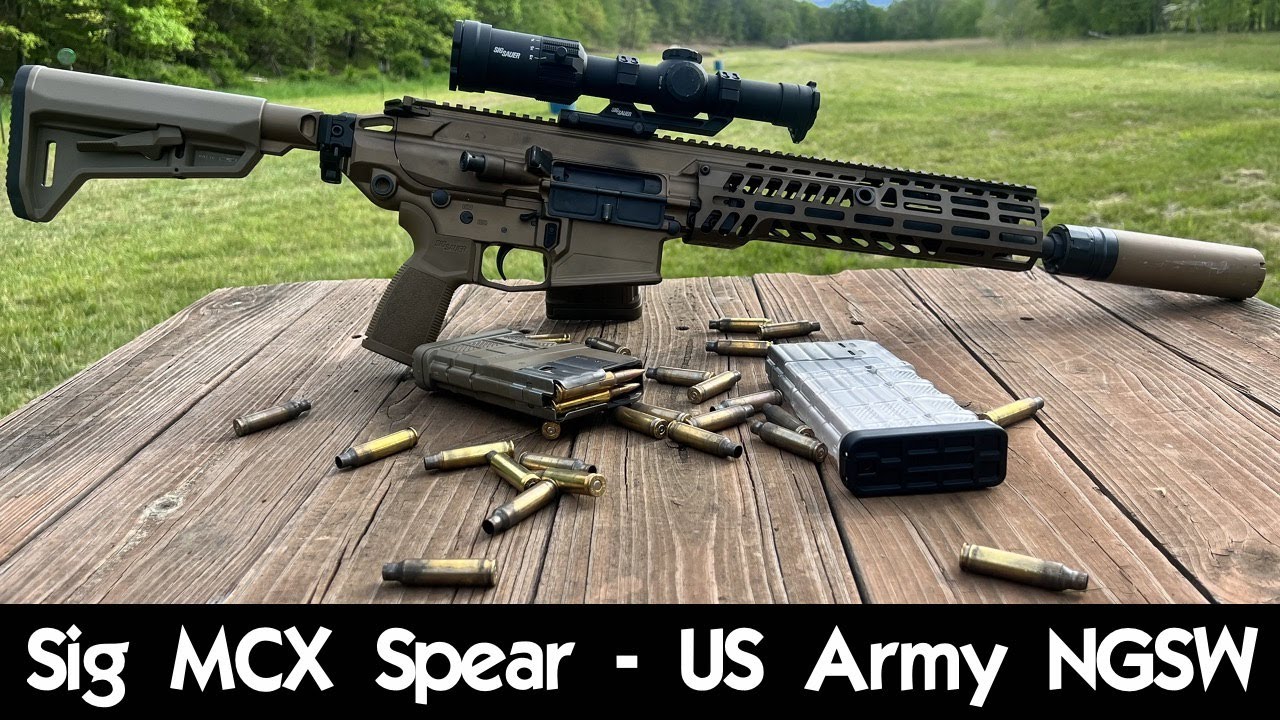
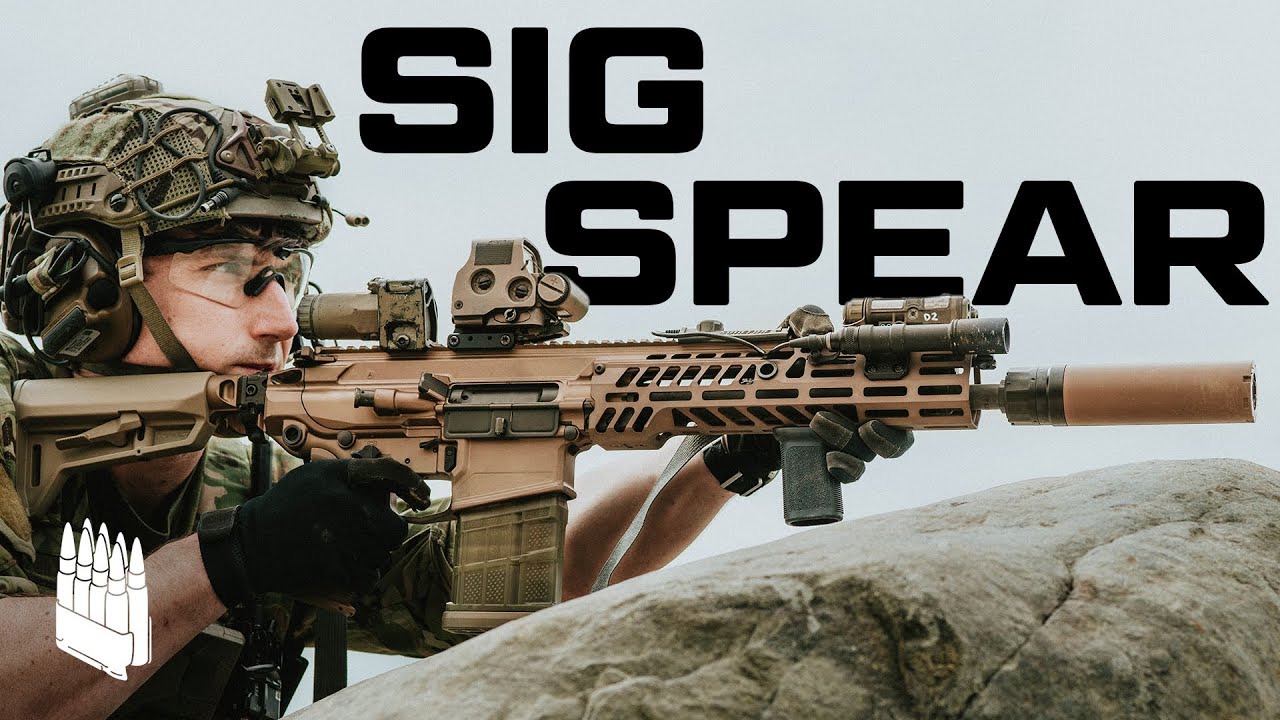
Is the U.S. Army’s Next Generation Squad Weapon a boondoggle in the making?

On all key technical measures, the Next Generation Squad Weapons program is imploding before Army’s very eyes. The program is on mechanical life support, and its progenitors at the Joint Chiefs obstinately now ramming the program through despite spectacularly failing multiple civilian-sector peer reviews almost immediately upon commercial release.

Civilian testing problems have, or should have, sunk the program already. The XM-5/7 as it turns out fails a single round into a mud test. Given the platform is a piston-driven rifle it now lacks gas, as the M-16 was originally designed, to blow away debris from the eject port. Possibly aiming to avoid long-term health and safety issues associated with rifle gas, Army has selected an operating system less hardy in battlefield environments. A choice is understandable in certain respects, however, in the larger scheme the decision presents a potentially war-losing cost/benefit analysis.

Civilian testing, testing Army either never did or is hiding, also only recently demonstrated that the rifle seemingly fails, at point-blank ranges, to meet its base criteria of penetrating Level 4 body armor (unassisted). True, the Army never explicitly set this goal, but it has nonetheless insinuated at every level, from media to Congress, that the rifle will penetrate said armor unassisted. Indeed, that was the entire point of the program. Of course, the rounds can penetrate body armor with Armor Piercing rounds, but so can 7.62x51mm NATO, even 5.56x45mm NATO.

The fundamental problem with the program is there remains not enough tungsten available from China, as Army knows, to make the goal of making every round armor piercing even remotely feasible.

These rifles (the weapon family is intended to replace the M4 carbine, the M249 SAW light machine gun, and the M240 machine gun) use the 6.8×51mm Common Cartridge (.277 SIG Fury), which is incompatible with the existing 5.56×45 mm and 7.62×51 mm NATO rounds and will require new logistics infrastructure to inventory and distribute, while eliminating commonality with the many allied countries that use the existing NATO-standard ammunition.

9 Likes

Reminds me of the old joke about the condemned prisoner on the scaffold being refused a last cigarette – Smoking kills, you know.

There are both short-term and long-term safety & survival issues with rifles. That is the whole point!

8 Likes

John, you are a well educated libertarian. You already know the answer.

3 Likes

While I’m not going to defend the US Army’s terrible ongoing track record in small arms acquisition, I do think that Dr. Orr has either missed the point or is eliding it because he thinks everyone reading Army Times already understands.

Mud Test: If you watch inRange TV regularly, you will find that many many rifles fail the mud test, including some with good reputations. eg. The famous M-1 Garand rifle does terribly when immersed in mud. Is it good that the M-5 fails? No, but how important that is depends on the planned usage conditions.

Armor piercing: The military justification of the XM-5 program is to remedy issues where the standard 5.56 rifles had insufficient range and penetration. Afghanistan isn’t the Fulda Gap isn’t Vietnam and it is a pretty terrible feeling not being able to return fire to some Afghani hobo who is shooting a .303 SMLE and is out ranging you. While 5.56 Armor Penetrating (AP) rounds will go through armor, what he leaves out is this is at much shorter range than the higher power systems and the point of the program was to increase the range. If you actually watch the video Dr. Orr linked, you’ll see that the shot did great damage to the level 4 plate, and the second shot went easily though it. Without an AP projectile, that isn’t terrible.

Rifle gas: As is common, the suppressor is the cause of the rifle gas issue. The included suppressor was also added to make it less detectable and manage the recoil. This also can have the effect of making Direct Impingement (DI) actions (such as in the AR-15/M-16/M-4 series) run very dirty which can cause reliability issues and require frequent cleaning. So the vendors designed rifles without DI actions.

Engineering is all about trade-offs. It is easy to show something is bad, by just showing all the bad things and none of the good. It is easy to show something is good, by just showing all of the good things and none of the bad. Far too much of what passes for discussion these days (here and elsewhere) takes one of the two preceding forms, to our general detriment.

You can make an argument that the 7.62 NATO systems are sufficient for AP at range, but then you end up with the inability to carry lots of ammunition and the limitations of 1950s ammo design. The NG program was trying an intermediate position, with a round between in physical dimension between 5.56 and 7.62, with better weight/volume characteristics, juiced up with a substantial powder charge and an optic that should help reduce ammunition expenditure. It wasn’t a dumb idea for a program, especially considering the earliest versions of the current rifle are now old enough to be eligible for the BATF Curios and Relics licensing. I personally think that once the dust settles it probably isn’t going to replace the current rifle at all levels, but it can certainly be used in some roles with great effectiveness.

Another video from inRange TV, tear down and discussion:

A more evenhanded look at the M-5 by Ian at Forgotten Weapons:

Ian takes the Spear to a shooting competition:

Garand Thumb:

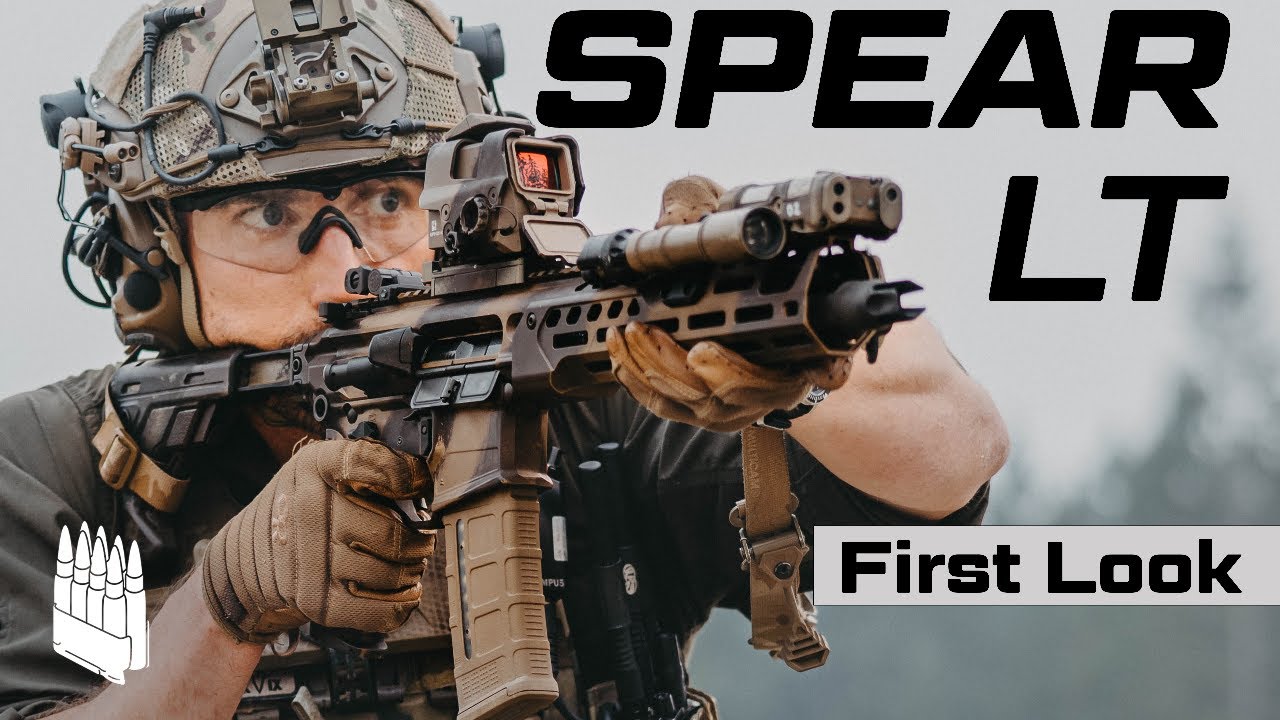
Garand Thumb looks at the Spear LT that shoots 5.56, he talk a lot about he trade-offs involved:

Edit: clear up AP abbreviation, fix punctuation

4 Likes

Twitter nannies tries to calm us all down about Chinese booming military expenditures, warning about dual Y axes, but neglecting to dive into what $1 buys in the US vs what that same $1 buys in China:
Screen Shot 2023-03-03 at 11.28.04 AM

2 Likes

Garand Thumb is awesome. The main guy looks like the frontman for the band Primus and so I immediately think of the music video My Name is Mudd when I watch the GT videos.

3 Likes

An excellent discussion. I think you hit on all the important points. Some may need some further discussion.

For a VERY LONG TIME both the benefits and shortcomings of the 5.56 have been well known. Even though the military likes to pretend it is effective at 500 yards, the plain truth, both on the qualifying range and in combat is that you are unlikely to hit anything beyond 400 yards, and that’s a bit of a stretch. So war in Europe and the jungles is doable with 5.56. The SP 109 round, with 62 gr and a steel core will penetrate Russian body armor, although I don’t know if they’ve improved it. SP 109 will ALSO zip through UNARMORED personnel - like the Taliban. What is also true is that 7.65x51 will defeat MOST body armor that withstands 5.56 or 7.63x39 (AK)

The 6.8 SPF is also not new. Special Forces were trying to get it, albeit in a length that could use the M4 lower. That failed. The reasons then were no different than now. Only difference is that we managed to fight for 20 years where we COULD have used it; NOW suddenly we need it.

Suppressor use is an important issue. More and more military weapons are using a suppressor. Not only does it cut the noise exposure of troops in contact but it also makes it harder to figure out where the fire is coming from. But suppressors cause a number of problems in a DI weapon, the LEAST of which is gas back at the shooter. The biggest problem is timing, and in a DI system solutions can include different buffers and springs, lightened BCG’s, and adjustable gas blocks. Ask any civilian who shoots suppressed and he will tell you a piston is best.

Of course THE biggest question is why not use the 7.62x51 NATO round. While it has been around a long time, there’s nothing “old” about it. It has optimized shoulder angle, has a wide range of Bullet weights you can use, and the FN FAL version battle rifle (which I think we should have adopted instead of the M-14) even comes with a built in adjustable gas port.

So we’re back to the question of range. IMO, there IS NO “PERFECT” BATTLE RIFLE. Just depends on what you need it for. For my money maintaining a supply of longer range rifles, and SOME units trained to use them, makes more sense than wholesale change. But I’m just an old, retired soldier.

8 Likes

Umm! Some of us still remember Joe Biden’s victorious retreat from Kabul. The Taliban won! Clearly, there is a lot more to warfare than which weapons are used.

Of course, a more realistic appraisal of the aims of warfare would probably lead to different choices in weapons – along with lower MIC profits and reduced kickbacks to the Political Class.

6 Likes
3 Likes
5 Likes
4 Likes

William Wallace? Erik The Red? Is anybody out there?

3 Likes