Looking for a good read? Here is a recommendation. I have an unusual approach to reviewing books. I review books I feel merit a review. Each review is an opportunity to recommend a book. If I do not think a book is worth reading, I find another book to review. You do not have to agree with everything every author has written (I do not), but the fiction I review is entertaining (and often thought-provoking) and the non-fiction contain ideas worth reading.
Book Review
Staying Alive
Reviewed by Mark Lardas
January, 18, 2026
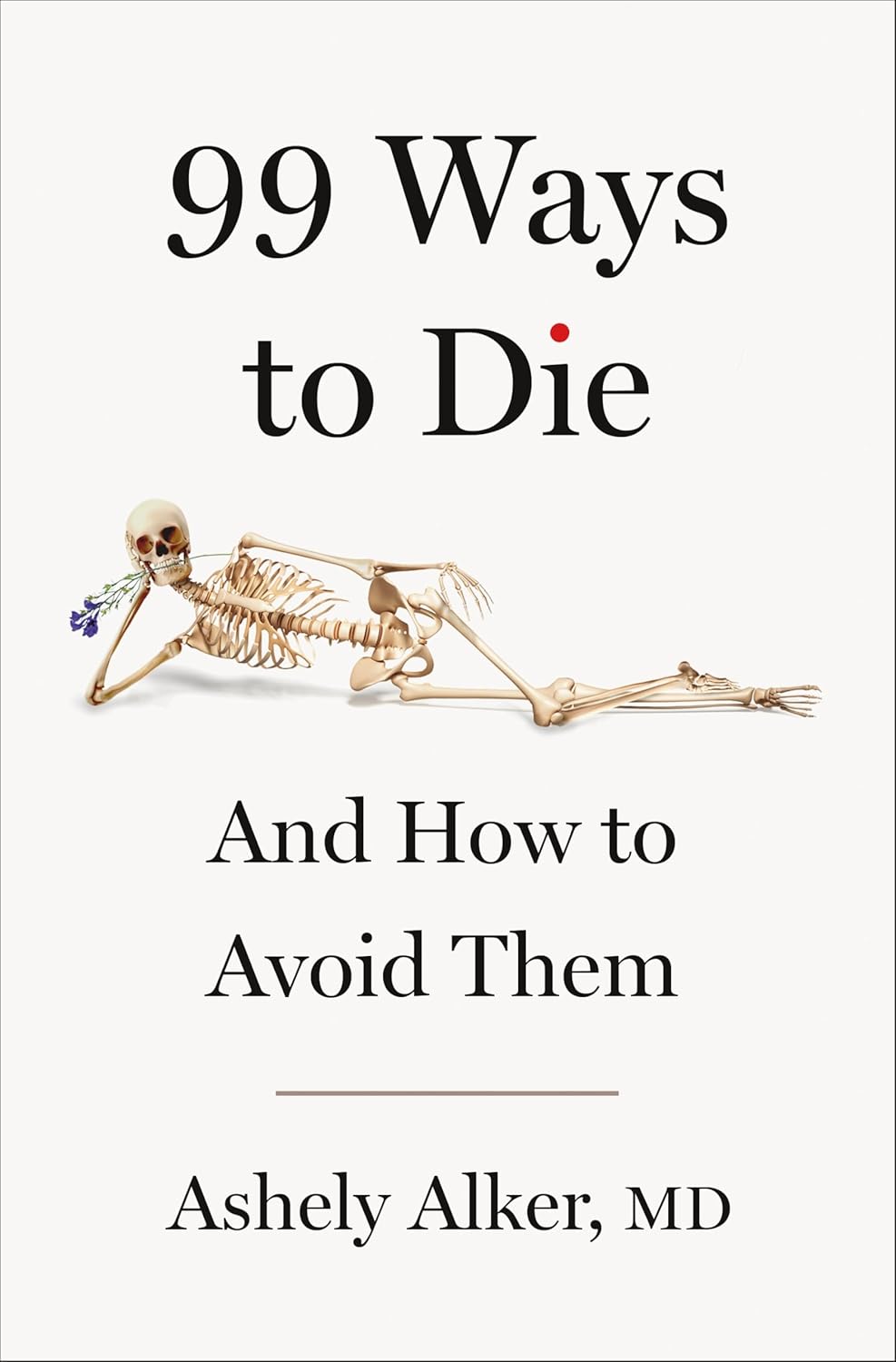
“99 Ways to Die: And How to Avoid Them,” by Ashely Alker M.D., St. Martin’s Press, January 2026, 384 pages, $30.00 (Hardcover), $15.99 (E-book), $23.57 (Audiobook)
There are all sorts of ways to end up dead. Disease, accidents and crime can do you in. Natural disasters can trap you. Drug overdoses or reactions can kill. Animal attacks can get you. So can war.
“99 Ways to Die And How to Avoid Them,” by Ashely Alker, M.D. enumerate the different ways the Grim Reaper can take you. It also offers strategies for avoiding death.
The author knows something of both death and its avoidance. Dr. Alker describes herself as a death escapologist. In plain language, she is an emergency medicine doctor.
She divides the book into thirteen categories of causes of death: infections, vaccine-preventable diseases, heart diseases, brain diseases, sex, drugs, animals, poison, food, travel, crime, environmental issues, and warfare. Each section has chapters explaining specific risks. (An example: the sex section has a chapter on risks associated with pregnancy.) There is some overlap. Some diseases poison you and some of the risks associated with food spill into infection and poisons.
Each chapter outlines the risks of featured issue. How does something cause death? What are the symptoms? How do you avoid the problem or reduce the risk associated with it? Alker freely admits many risks cannot be avoided, and must simply be managed. Death gets all of us in the end.
She tells her story with humor. She brings in her emergency room practice, drawing from personal experiences with patients and in her own life. (Some are surprising, including her own encounter with a serial killer.) She writes from the perspective of a very establishment practitioner of medicine – with both the advantages and limitations implied.
The book’s multiple short chapters normally make it great bedtime reading. You can put it down after a brief read without losing the thread of what you have been reading. However, a terminal worrier will likely spend the rest of the night unable to sleep after reading. Nor is this a book for hypochondriacs. Imagined symptoms (even real ones – as Alker frequently points out, innocent aches and pains sometimes mask deadly problems) will likely prompt in multiple trips to the ER after every chapter.
For everyone else? “99 Ways to Die” is both entertaining and informative, illuminating and often hilarious. Readers will have to make their own judgements about the risks of their activities. (Is life without cheeseburgers worth living? That is an individual decision.) Yet this book allows informed consent.
Mark Lardas, an engineer, freelance writer, historian, and model-maker, lives in League City. His website is marklardas.com.
https://www.amazon.com/99-Ways-Die-Avoid-Them/dp/1250359643/