Looking for a good read? Here is a recommendation. I have an unusual approach to reviewing books. I review books I feel merit a review. Each review is an opportunity to recommend a book. If I do not think a book is worth reading, I find another book to review. You do not have to agree with everything every author has written (I do not), but the fiction I review is entertaining (and often thought-provoking) and the non-fiction contain ideas worth reading.
Book Review
When the Rangers Came
Reviewed by Mark Lardas
April 19, 2026
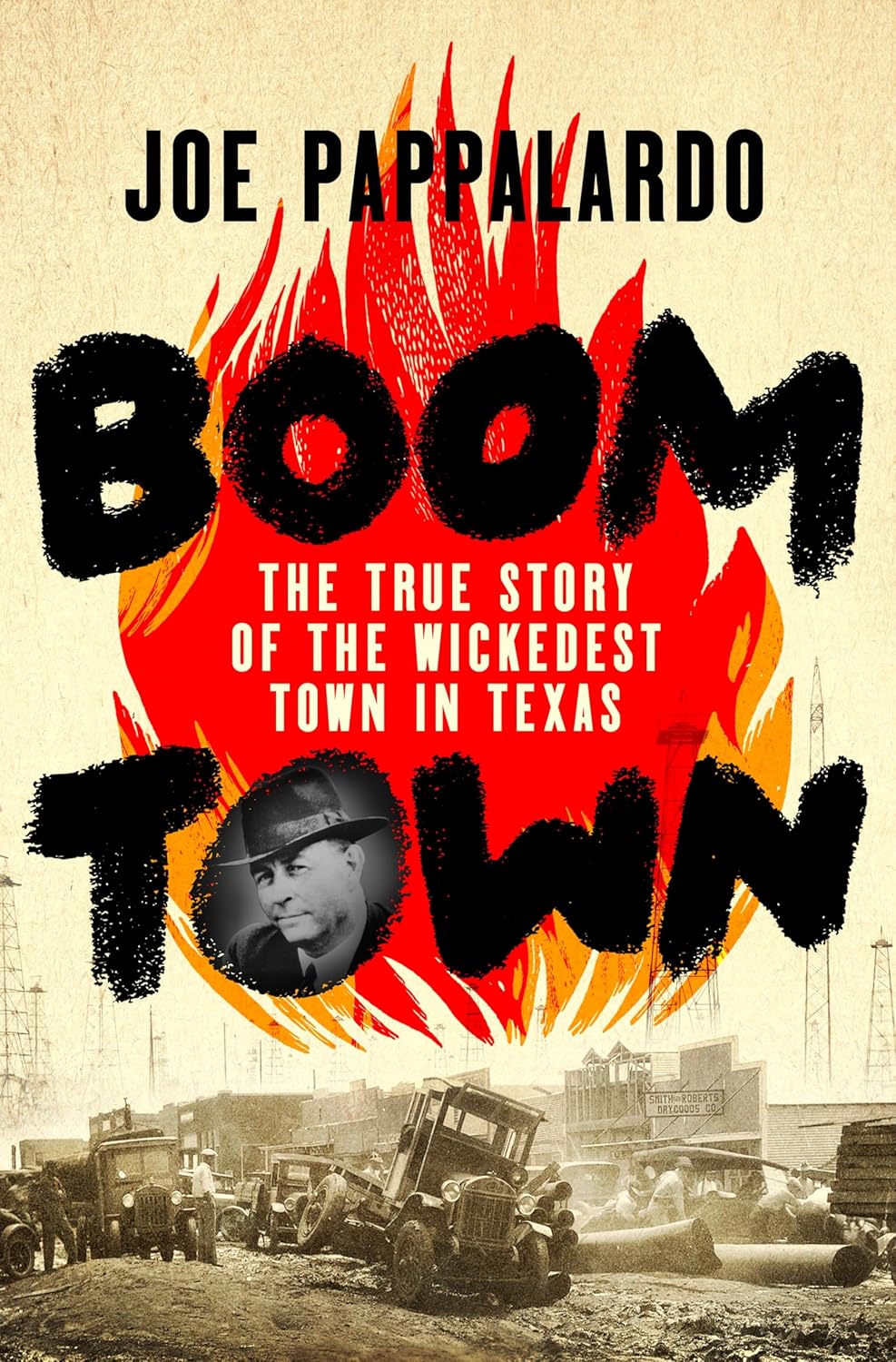
“Boomtown: The True Story of the Wickedest Town in Texas,” by Joe Pappalardo, St. Martin’s Press, April 2026, 352 pages, $31.00 (Hardcover), $15.99 (E-book), $20.78 (Audiobook), $45.95 (Audio CD)
One riot, one ranger is the normal Texas rule. But rules are meant to be broken. Borger, Texas in the 1920s was so corrupt, so wide-open to crime, and so out of control, in 1927 the Texas Governor, Daniel Moody, sent in a squad of Texas Rangers to clean up Borger.
“Boomtown: The True Story of the Wickedest Town in Texas,” by Joe Pappalardo, tells the story of that clean-up. It shows how the Rangers went to Borger, and how they shut down a wide-open town.
Borger was established in 1926, when Asa Philip “Ace” Borger and John R. Miller purchased land and platted a townsite in Texas Panhandle Hutchinson County. Oil had been discovered nearby. The two hoped to profit by setting up a town there.
As Pappalardo shows, they intended to earn money through more than land sales. From the start the two intended Borger to be an “open” town, where bootlegging, prostitution, gambling, and vice would flourish. Miller, Borger’s appointed mayor when it opened, was elected by supporters who ran the town’s vice industries. They skimmed money from its vice industries. They also profited from graft; pocketing tax money intended for municipal improvements, setting up sweetheart deals for school and hospital construction.
The predictable happened. Local crime spiraled out of control. Criminals used Borger as a base for crimes committed in Oklahoma and elsewhere in Texas. Borger became a synonym for vice, nicknamed “Booger Town.” After a series of murders of prominent residents, Texas’s new governor sent the Rangers, led by the legendary captains Frank Hamer and Thomas Hickman to take control of the town.
“Boomtown” describes how they did it, following the occupation from March through August 2027. It shows how the Rangers arrived, started their cleanup by forcing Borger’s vice-friendly police chief to resign (replaced with an ex-Ranger), and then shuttered Borger’s red-light district. Rangers kicked out the bootleggers and criminals, and destroyed area stills.
Over the next few months, they sought the resignation of city and county officials most viewed as corrupt. Surprisingly, as Pappalardo relates, even those favoring reform in Borger, tired of the Ranger presence. They believed the Rangers were heavy-handed (spoiler alert – they were), and felt the continued occupation gave Borger a bad reputation.
“Boomtown” is a delightful book. Filled with larger-than-life characters (on both sides of the law), Pappalardo provides color and excitement in this history of Borger’s bad days.
Mark Lardas, an engineer, freelance writer, historian, and model-maker, lives in League City. His website is marklardas.com.