Looking for a good read? Here is a recommendation. I have an unusual approach to reviewing books. I review books I feel merit a review. Each review is an opportunity to recommend a book. If I do not think a book is worth reading, I find another book to review. You do not have to agree with everything every author has written (I do not), but the fiction I review is entertaining (and often thought-provoking) and the non-fiction contain ideas worth reading.
Book Review
Tennyson as Pioneer and Scientist
Reviewed by Mark Lardas
February 15, 2026
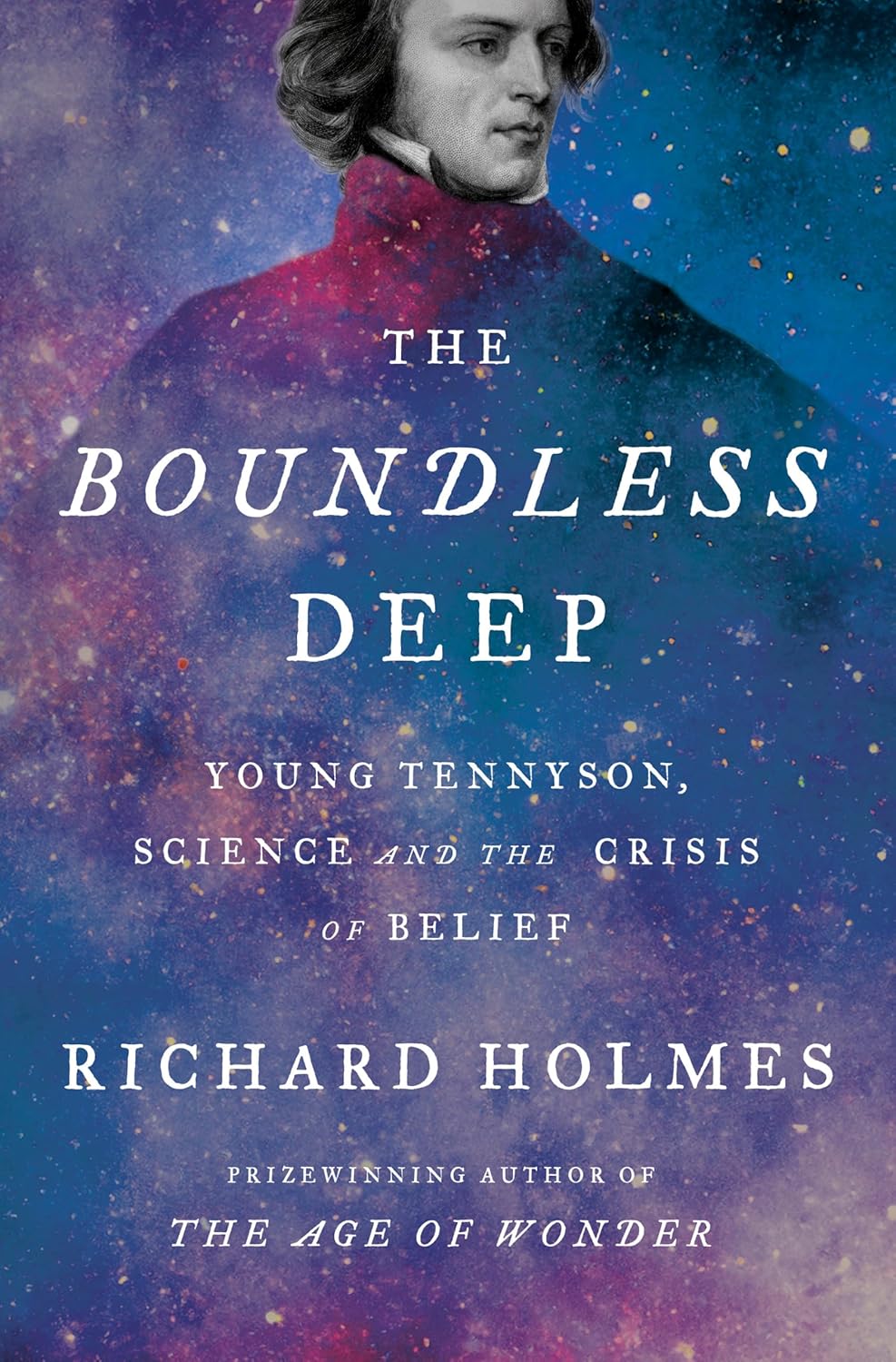
“The Boundless Deep: Young Tennyson, Science and the Crisis of Belief,” by Richard Holmes, Pantheon, February 2026, 448 pages, $35.00 (Hardcover), $14.99 (E-book), $23.40 (Audiobook)
Alfred Tennyson, 1st Baron Tennyson, is the best-known British poet of the Victorian Era. Today’s world views Tennyson as an old man, in a wide-brimmed Spanish hat, wearing a flowing black cape and long white beard, thoroughly establishment. But Tennyson was young once, a groundbreaking literary avant-garde.
“The Boundless Deep: Young Tennyson, Science and the Crisis of Belief,” by Richard Holmes, examines the Tennyson who came before the aged, establishment peer. It traces his life from his birth through the death of his good friend, Edward FitzGerald.
His father, George Clayton Tennyson, was a beneficed Anglican minister, solidly gentry. But they were from a poorer branch of the family. George had a violent temper and drifted into insanity and alcoholism. Alfred the fourth of twelve children. As Holmes shows several also had bouts with insanity and alcoholism.
He blossomed when he went to Cambridge. Initially part of older brothers Frederick and, Charles’s circle, Alfred formed his own, including friendships with several prominent future Victorians, among them FitzGerald and William Henry Brookfield. His closest friend was Arthur Henry Hallam, who became affianced to Tennyson’s sister Emilia, before Hallam’s tragic death at 31.
Alfred and Arthur were poets with the same liberal bent. They collaborated on poetry, even planning to publish a joint book of verse. Tennyson would later memorialize his friend in verse.
Homes then follows Tennyson’s life after Cambridge. He shows Tennyson’s emergence as a poet, from avant-guard to establishment pillar. Holmes also traces Tennyson’s progress from impecuniosity to financially secure, primarily through book royalties, unusual for a poet.
Particularly fascinating is how Holmes shows Tennyson viewed himself as much as a man of science as of a man of letters. There was then no division between the arts and sciences. Holmes shows how the latest advances in science were present in Tennyson’s verse. It is often as scientifically accurate as it is technically perfect poetry.
Holmes also shows why Tennyson became a popular figure with everyday Britons, outside literary circles. Tennyson’s poetry was easily memorized and sounded great recited aloud. Tennyson was so talented a poet reading his verse aloud sounded like natural spoken speech, not the sing-song of lesser verse. Plus, his themes struck national chords.
“The Boundless Deep” is a fascinating look at the development of a great poet and his transformation from a literary pioneer to a cultural standard. It offers insight into both Tennyson and his times.
Mark Lardas, an engineer, freelance writer, historian, and model-maker, lives in League City. His website is marklardas.com.
https://www.amazon.com/Boundless-Deep-Tennyson-Science-Crisis/dp/B06WP81F6Z