Looking for a good read? Here is a recommendation. I have an unusual approach to reviewing books. I review books I feel merit a review. Each review is an opportunity to recommend a book. If I do not think a book is worth reading, I find another book to review. You do not have to agree with everything every author has written (I do not), but the fiction I review is entertaining (and often thought-provoking) and the non-fiction contain ideas worth reading.
Book Review
A Saginaw River Disaster
Reviewed by Mark Lardas
October 4, 2026
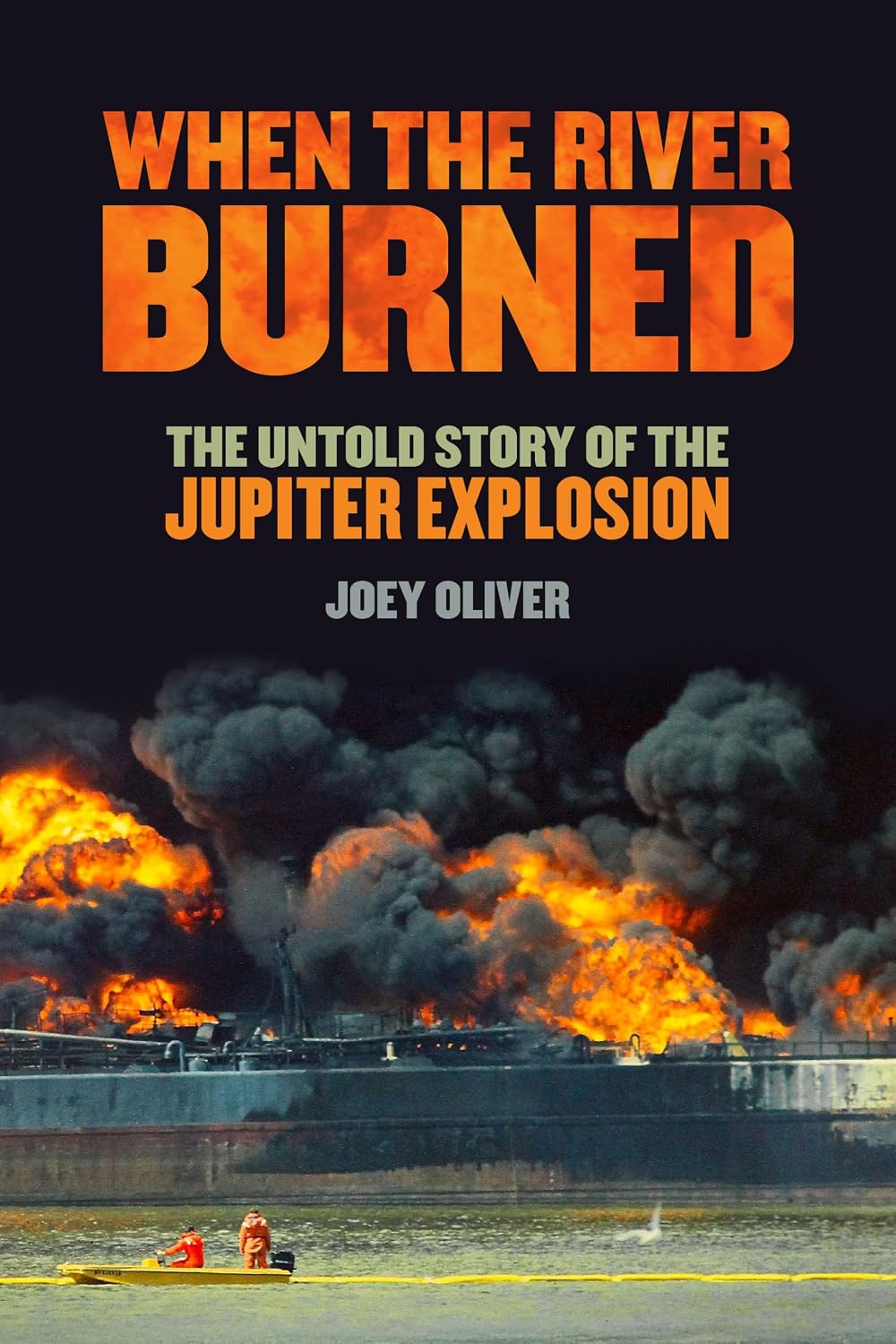
“When the River Burned: The Untold Story of the Jupiter Explosion,” by Joey Oliver, Michigan State University Press, October 2026, 140 pages, $29.95 (Paperback), $29.95 (E-book)
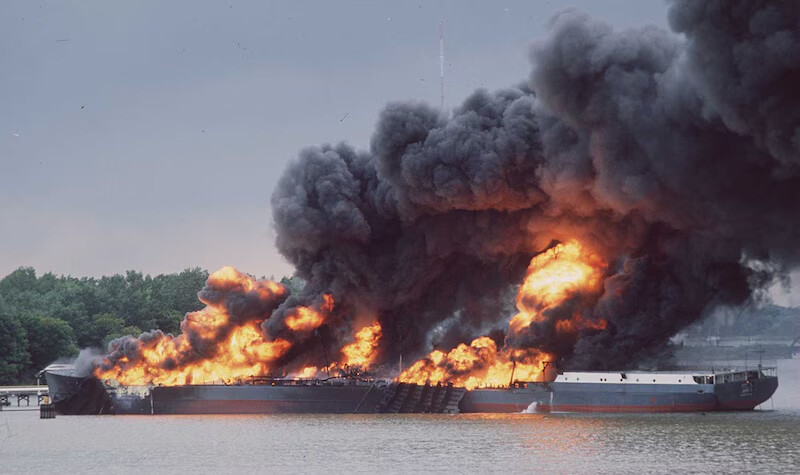
On September 16, 1990 Lakes tanker Jupiter was unloading gasoline at Bay City, Michigan, at a pier on the Saginaw River. Then disaster struck. Pulled from the pier by the suction of another ship’s passage, Jupiter began leaking gasoline from the unloading hoses. A spark ignited the gasoline. Jupiter exploded.
“When the River Burned: The Untold Story of the Jupiter Explosion,” by Joey Oliver tells what followed. It describes the accident as it developed, the firefighting effort, the aftermath of the explosion, and the resulting changes.
Oliver begins by putting Bay City and the Saginaw River in a historical context. He shows how the area was settled, the industries there (largely timber in the nineteenth century), and how Bay City developed into a major Great Lakes harbor and shipbuilding center. He also shows how chemical industries replaced timber as the region’s economic mainstay. It includes discussion of the environmental impact logging and chemical plants had on the Saginaw River watershed.
Then he explores the accident. He shows the disaster resulted through a cumulative set of minor factors. A passing ship going too fast. A deteriorated wharf at which Jupiter was anchored. Jupiter’s crew failed to stop unloading operations as the other ship passed. Individually each was harmless. Combined, catastrophe resulted. The pier failed, pulling Jupiter into the river and rupturing the connection between Jupiter’s still running pumps and the shoreside tanks Jupiter was loading.
Oliver highlights the responses to the incident. Jupiter’s and the Coast Guard responded quickly. Only one life was lost during the incident. But the Bay City fire department was unprepared to handle a fire of that magnitude. The fire raged until a commercial firefighting company extinguished it three days later.
Moreover, the response created an environmental problem. The firefighting foam used to contain and quench the gasoline contained a “forever chemical” with deadly environmental effects. Worse, no one at that time was aware of the long-term dangers of the foam.
As Oliver shows, there was also positive fallout from the worst Great Lakes disaster of the last 50 years. The Coast Guard investigation yielded several lessons-learned. Several were implemented, reducing the chances of a repetition of the accident. Not just at Bay City, but at all US ports.
“When the River Burned” is a fascinating study of the interconnectedness of complex systems. It shows the importance of careful attention to detail with ships and shoreside operations.
Mark Lardas, an engineer, freelance writer, historian, and model-maker, lives in League City. His website is marklardas.com.