
3 Likes

3 Likes
5 Likes
How can there be a “crack… into the cargo hold”?
6 Likes
DC-10 back in the spotlight after 737 dominated recent accidents:

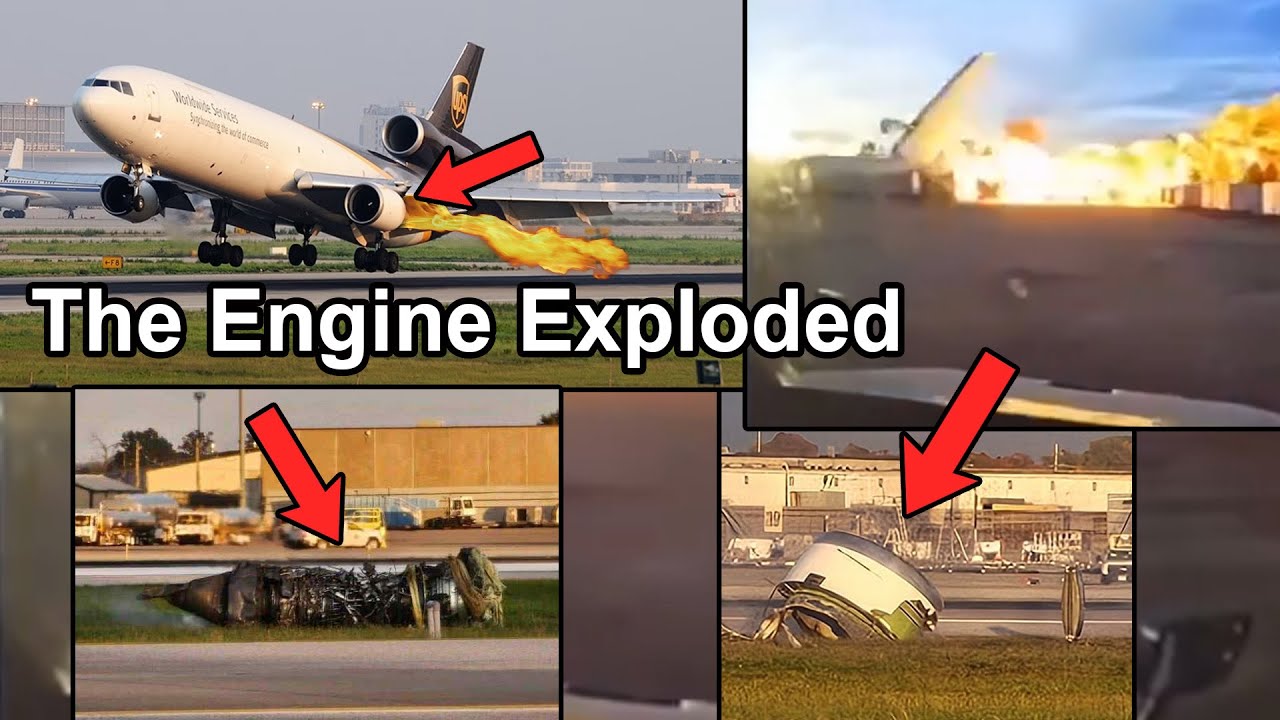

https://registry.faa.gov/AircraftInquiry/Search/NNumberResult?nNumberTxt=259UP
3 Likes
I wonder if this is similar to American flight 191 at O’Hare in 1979. There, due to improper removal of the engine from the wing for maintenance, the engine mount failed, the engine separated and the plane crashed immediately after takeoff. As I recall, it was also #1 engine. In that crash, the separated engine actually accelerated forward after separation, hit the leading edge of the wing, broke the hydraulic lines which caused the leading edge of the left wing to retract. That wing lost lift and the plane rolled inverted and hit the ground in a fireball.
4 Likes
Other than the fire while taking off, looks similar:
https://www.faa.gov/lessons_learned/transport_airplane/accidents/N110AA
3 Likes

2 Likes

Went through a “heavy maintenance” ending October 18.
2 Likes

Aviation Safety EMERGENCY
AIRWORTHINESS DIRECTIVE
AD #: 2025-23-51
Emergency Airworthiness Directive (AD) 2025-23-51 is sent to owners and operators of The Boeing Company Model MD-11 and MD-11F airplanes.
This emergency AD was prompted by an accident where the left-hand engine and pylon detached from the airplane during takeoff. The cause of the detachment is currently under investigation. This condition could result in loss of continued safe flight and landing.
FAA’s Determination
The FAA is issuing this AD because the agency has determined the unsafe condition is likely to exist or develop in other products of the same type design.
AD Requirements
This AD prohibits further flight until the airplane is inspected and all applicable corrective actions are performed using a method approved by the Manager, AIR-520, Continued Operational Safety Branch, FAA.
Interim Action
The FAA considers this AD to be an interim action. If final action is later identified, the FAA might consider further rulemaking then.
Justification for Immediate Adoption and Determination of the Effective Date
Section 553(b)(3)(B) of the Administrative Procedure Act (APA) (5 U.S.C. 551 et seq.) authorizes agencies to forgo notice and comment procedures for rules when the agency, for “good cause,” finds that those procedures are “impracticable, unnecessary, or contrary to the public interest.” Under this section, an agency, upon finding good cause, may issue a final rule without providing notice and seeking comment prior to issuance. Further, section 553(d) of the APA authorizes agencies to make rules effective in less than thirty days, upon a finding of good cause.
An unsafe condition exists that requires the immediate adoption of this emergency AD to all known U.S. owners and operators of these airplanes. The FAA has found that the risk to the flying public and safety in air commerce justifies forgoing notice and comment prior to adoption of this rule because the severity of the unsafe condition necessitates prohibiting further flight until the airplane is inspected and the applicable corrective actions are performed. The compliance time in this AD is shorter than the time necessary for the public to comment and for publication of the final rule.
Accordingly, notice and opportunity for prior public comment are impracticable and contrary to the public interest pursuant to 5 U.S.C. 553(b)(3)(B).
In addition, the FAA finds that good cause exists pursuant to 5 U.S.C. 553(d) for making this amendment effective in less than 30 days, for the same reasons the FAA found good cause to forgo notice and comment.
Authority for this Rulemaking
Title 49 of the United States Code specifies the FAA’s authority to issue rules on aviation safety. Subtitle I, section 106, describes the authority of the FAA Administrator. Subtitle VII, Aviation Programs, describes in more detail the scope of the Agency’s authority.
The FAA is issuing this rulemaking under the authority described in Subtitle VII, Part A, Subpart III, Section 44701, General requirements. Under that section, Congress charges the FAA with promoting safe flight of civil aircraft in air commerce by prescribing regulations for practices, methods, and procedures the Administrator finds necessary for safety in air commerce. This regulation is within the scope of that authority because it addresses an unsafe condition that is likely to exist or develop on products identified in this rulemaking action.
Presentation of the Actual Emergency Airworthiness Directive
The FAA is issuing this emergency airworthiness directive under 49 U.S.C. 106(g), 40113, and 44701 according to the authority delegated to me by the Administrator.
2025-23-51 The Boeing Company: Project Identifier AD-2025-01671-T.
(a) Effective Date
This emergency airworthiness directive (AD) is effective upon receipt.
(b) Affected ADs
None.
(c) Applicability
This AD applies to all The Boeing Company Model MD-11 and MD-11F airplanes, certificated in any category.
(d) Subject
Air Transport Association (ATA) of America Code 54, Nacelles/pylons.
(e) Unsafe Condition
This AD was prompted by an accident where the left-hand engine and pylon detached from the airplane during takeoff. The cause of the detachment is currently under investigation. The unsafe condition could result in loss of continued safe flight and landing.
(f) Compliance
Comply with this AD within the compliance times specified, unless already done.
(g) Inspection and Other Action
As of receipt of this emergency AD, further flight is prohibited until the airplane is inspected and all applicable corrective actions are performed using a method approved by the Manager,
AIR-520, Continued Operational Safety Branch, FAA.
(h) Special Flight Permit
Special flight permits, as described in 14 CFR 21.197 and 21.199, are not allowed unless approved in accordance with the procedures specified in paragraph (i)(1) of this AD.
(i) Alternative Methods of Compliance (AMOCs)
(1) The Manager, AIR-520, Continued Operational Safety Branch, FAA, has the authority to approve AMOCs for this AD, if requested using the procedures found in 14 CFR 39.19. In accordance with 14 CFR 39.19, send your request to your principal inspector or responsible Flight Standards Office, as appropriate. If sending information directly to the manager of the Continued Operational Safety Branch, send it to the attention of the person identified in paragraph (j) of this AD. Information may be emailed to: AMOC@faa.gov. Before using any approved AMOC, notify your appropriate principal inspector, or lacking a principal inspector, the manager of the local flight standards district office/certificate holding district office.
(2) An AMOC that provides an acceptable level of safety may be used for any repair, modification, or alteration required by this AD if it is approved by The Boeing Company Organization Designation Authorization (ODA) that has been authorized by the Manager, AIR-520, Continued Operational Safety Branch, FAA, to make those findings. To be approved, the repair method, modification deviation, or alteration deviation must meet the certification basis of the airplane, and the approval must specifically refer to this AD.
(j) Additional Information
For more information about this AD, contact Brian Knaup, Manager, AIR-520, Continued Operational Safety Branch, FAA, 2200 South 216th St., Des Moines, WA 98198; phone: 817-222-5390; email: OperationalSafety@faa.gov.
Issued on November 8, 2025.
Mallory A. Naill,
Acting Deputy Executive Director, Aircraft Certification Service.
3 Likes
3 Likes
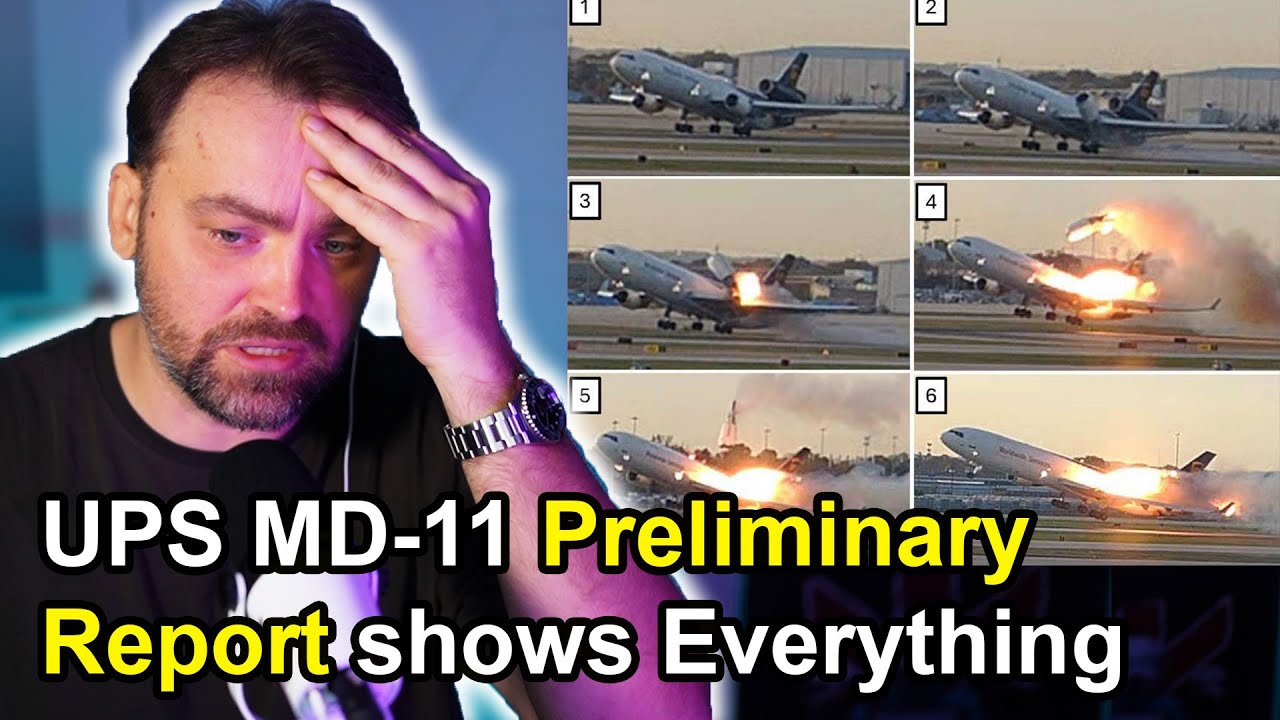
Federal regulators release initial report for UPS cargo plane crash, saying they found “evidence of fatigue cracks” in the left pylon, where the engine separated during takeoff.
The report confirms the total number of injuries from the crash to be, 4 fatal, 2 serious and 21 minor.
Read more: UPS cargo jet Initial report released - Disclose.tv
3 Likes
A special detailed inspection (SDI) of the left pylon aft mount lugs would have been due at 29,200 cycles and of the left wing clevis support would have been due at 28,000 cycles. The accident airplane records showed these two SDI tasks had not been accomplished (the airplane had 21,043 cycles).
Given supply chain changes since that MD-11 was built in 1991, I worry that more recent commercial alloys may be inferior to 1990 alloys and that inspection schedules for newer aircraft may be even more overly optimistic than for the MD-11.
5 Likes

3 Likes
Girl loses her way and almost lands at MacDill AFB.
3 Likes
5 Likes
Aviation accidents are merely the tip of the massive iceberg of uncare and incompetence at the very center of society. What a shame.
5 Likes
“The Army crew negligently flew off the flight route towards the center of the Potomac River at too high an altitude,”
To be more precise, the DIE-promoted female pilot paid no attention to instructions. Whether she did that because she was not sufficiently trained or capable, or because she was a woman dammit and don’t tell me what to do – we will never learn.
If the government is responsible, then the generals and politicians who put that woman into the position where she killed scores of human beings should be on a chain gang picking up trash for the rest of their lives. Admitting liability should have consequences!
5 Likes
NTSB issues an update on its ongoing investigation into the Nov. 4 crash of a United Parcel Service Boeing MD-11F airplane shortly after takeoff from Kentucky's Muhammad Ali International Airport. Download the six-page PDF: https://t.co/LHE49dvZJ9 pic.twitter.com/5MEJcuyMzz
— NTSB Newsroom (@NTSB_Newsroom) January 14, 2026
3 Likes