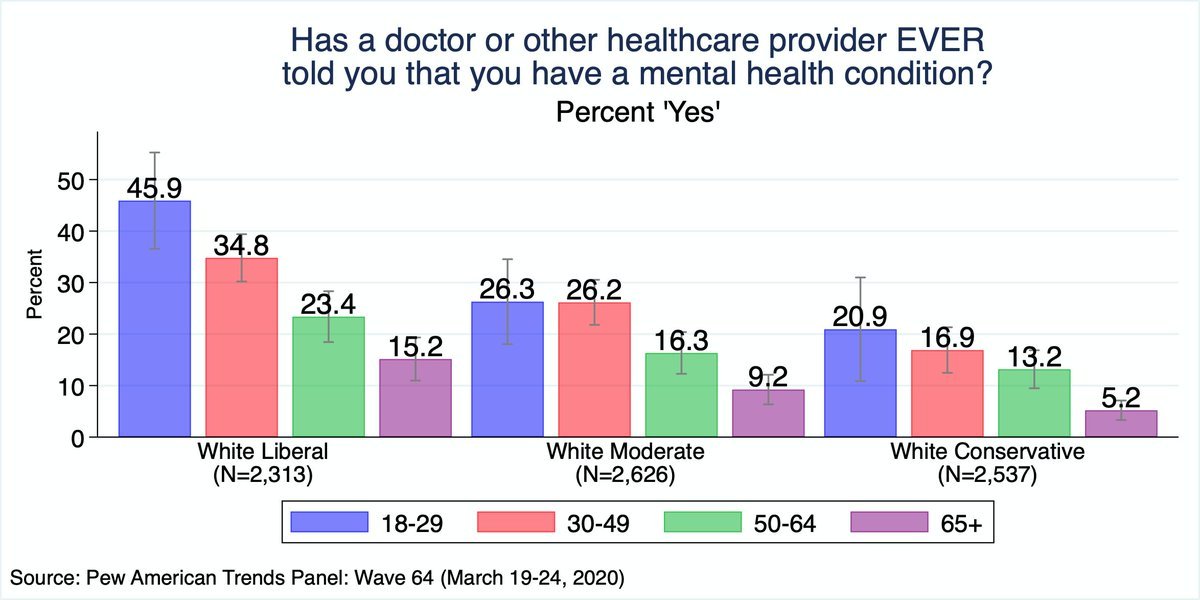
Not to put too fine a point on it but only having male Trump voters prioritizing family formation is not enough. This is basic birds & bees stuff: the females have to want it also. As the more complete table posted by @eggspurt shows, that does not appear to be the case. In short, your data do not support your hypothesis. Herein lies the danger of wishful thinking,
The silver lining is that the kooks are, indeed, removing themselves from the gene pool. Woke ideology does result in lower fertility not captured by the Trump/Harris voter dichotomy because women in both camps have succumbed to feminist dysgenic propaganda. The division is more along the lines of religiosity and other factors that are somewhat correlated to political position. The spiteful mutants are resigning from the future.
Woke eugenics is real. Ed Dutton even coauthored a book about it.
Assuming you are talking only about white leftists, they are using aggressive state-sponsored prosthletization to augment their low birthrate. That can yield two-fers as evidenced by the latest atrocity.
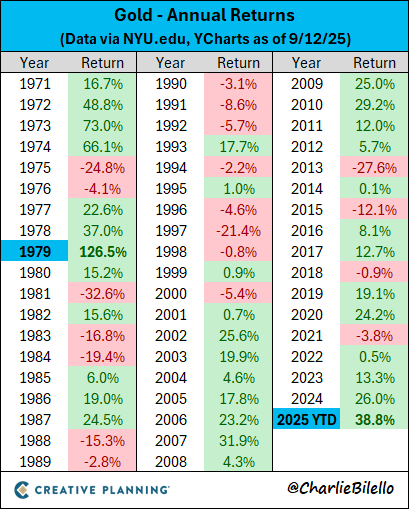
Are those “returns” on physical gold before or after the costs of storage, security, and average occasional losses from insufficient security?
Since gold generates no actual return (unlike, say, a dividend-paying stock), the only way to realize a return is to sell the physical gold, which usually triggers a tax obligation. Do the quoted figures account for that obligation?
Of course there is also “paper gold” – but it seems to me that paper gold is pretty much a pseudo-fiat. Trust us! There is a gold bar in some far-off vault with your name on it. Pinky swear!
There are ways to generate a return on gold. Many people that own gold hold it not as an investment, but as protection against fiat debasement. The other purpose is as an asset that performs well in times of economic uncertainty.
This is true of almost every asset class. Do you have math on a specific asset class for comparison? Farm land for example has not provided an after tax real return without appreciation.
This points out the argument for gold and bitcoin. Gold and BTC possession has no counterparty risk. Of course gold can be stolen and BTC can be lost which goes to show there are no free meals and there are no risk free investments.
I would gladly pay the taxes on any investment that has done as well over such a long period of time. That said I hope I never have to sell the gold I do own.
If one never sells an asset, then can it really be called an asset at all? It is more of a possession with sentimental value – like that vase which Aunt Ann bequeathed to us.
Never is a long, long time. One should not really commit oneself to “never”, when talking about assets. They are ALL useable, and they ALL vary in value with time. NO asset only goes up in value.
Since 2001, all our family savings have been invested in Edelweiss Holdings, operating quietly with no “sales” department, in the jurisdiction of the Channel Islands. It is a small private equity holding company (not a “fund”), which has owned physical gold in the range of 30 - 50% in that period. Naturally, there has been intermittent criticism. The philosophy is based on the question of safety of irreplaceable savings. Gold is held as a liquid store of value which may be converted at any time to ownership of more productive assets, as they may become available. We have done that, through an extraordinarily careful process of finding companies - run by OWNERS, not renters - usually small family owned and run enterprises who are uninterested in the price of their stock (if, indeed, it is even traded publicly). We participate in businesses considering ourselves as owners; most, we keep long term, as we have a low time preference. Much of what is called “investing” today has nothing to do with ownership. It more resembles renting, as actual company operations take a back seat to some Nth derivative of what others think the stock price will be at some (short) future date. No thanks. I won’t brag, but say we live modestly and comfortably. We were just able to absorb about 50K of unexpected expenses from a water leak into the basement of our home. This did not threaten our lifestyle and, though I wasn’t happy about it, I was able to say to myself it only hurt emotionally, not economically. It preserves value in our home which will pass to our children, for whom Edelweiss shares are also destined. Preservation of capital has been our first priority and we are succeeding. Gold has been an important tool in that endeavor. We don’t consider it an “investment”. BTW, in addition to several currencies, we sometimes measure our performance in terms of gold. That is much less impressive.
“For our capital to survive, we must shun what is financial and focus on what is real. We must prioritize resilience and endurance over returns and build a collection that will remain relevant despite the risks ahead.” - Edelweiss Holdings
The issue I have with diamonds is that they can be manufactured. If someone develops an economic means to make gold, I would sell.
The part of @Gavin ’s argument I agree with is that gold, BTC, diamonds, art, classic cars, Nintendo games and paper money are all what I call psychological assets. Meaning they only have value if a certain percentage of people believe they have value. Therefore, I may be wrong and real diamonds may hold value just as real art holds its value even when an exact duplicate can be made for almost nothing.
Lau Vegys who writes for Doug Casey’s followers pointed out something I hadn’t noticed when I read the book Path Betwewn The Seas that a junior engineer working on the Panama Canal was paid in gold coins. I don’t remember the exact figures, but the pay translated into about 450,000 today.
I would be interested in what you measure gold against I sometimes measure against the Chevy Corvette (goes down in terms of gold) Starting salary for an engineer (went down in terms of gold). s&p 500 (beat gold) and US 10 year treasuries (gold outperforms).
I think the key is pay. Pay going down faster than prices in terms of gold is not good.
Here is an interview with the founder of Edelweiss Holdings. New investors were not being taken when I investigated after watching some six or so years ago.
There also wrote some good articles, but have not written in several years.
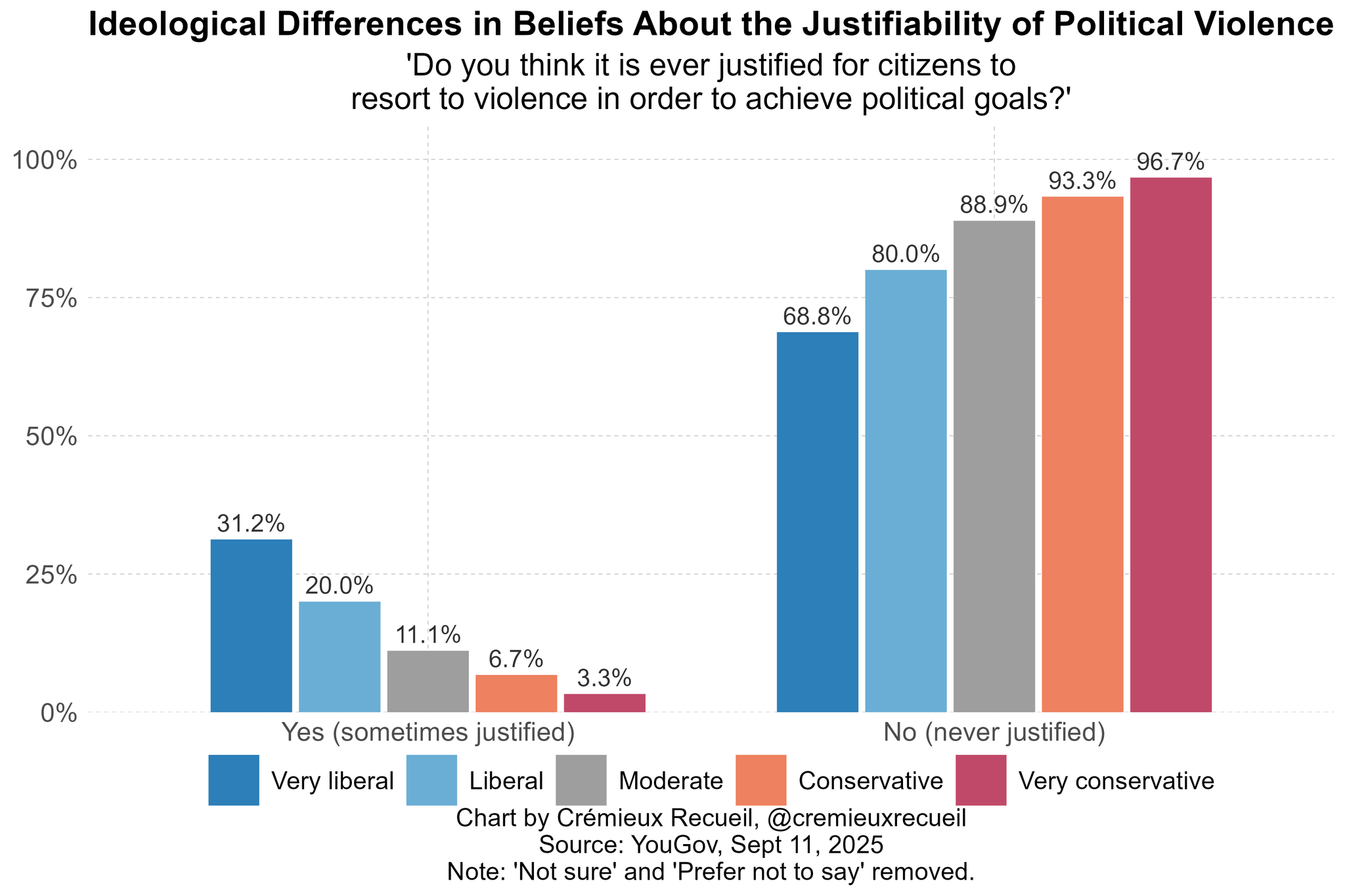
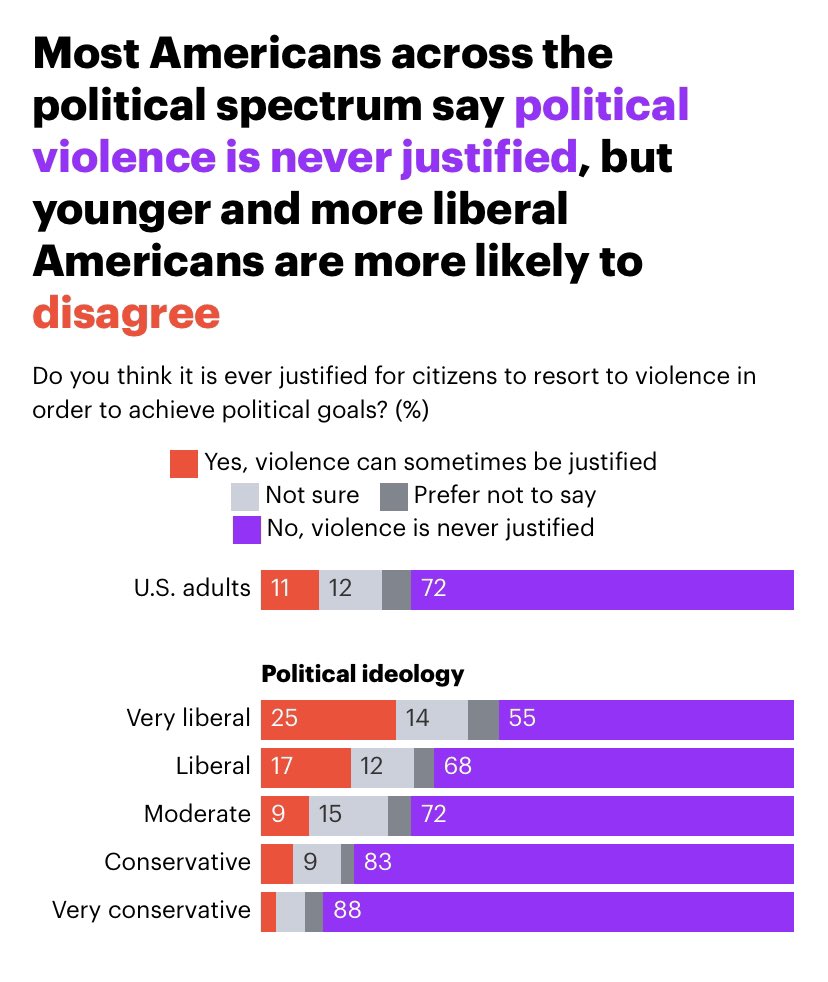
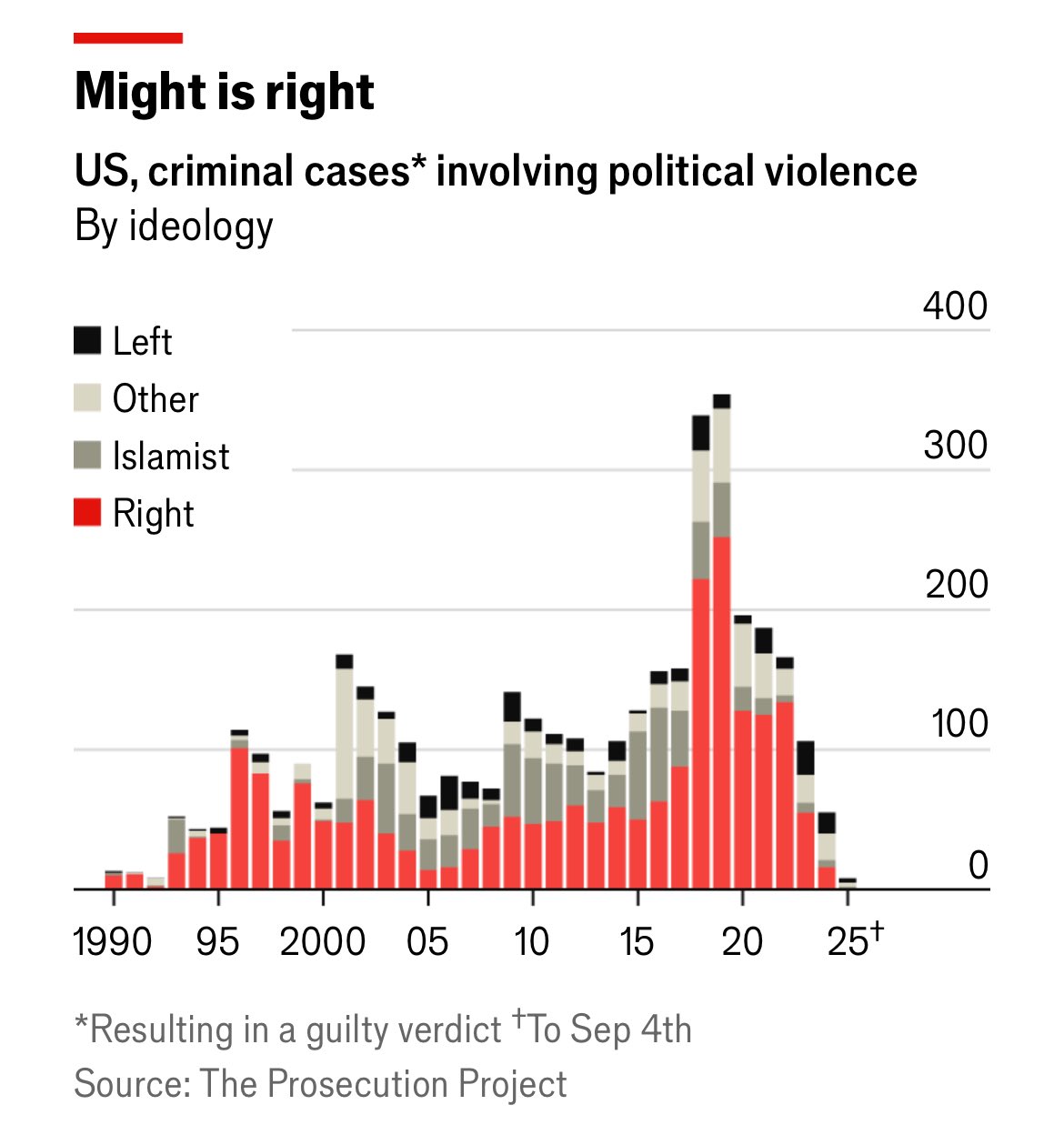
?What exactly is “political violence. ?Was our revolution in 1776 “political violence”. ?What would be the parameters of when it may or may not be used.
These charts appear to be highly emotionally driven. I, for one, can envision numerous times when violence is reasonable. But don’t mind me; I’m sort of an atavistic guy.
“Political violence” means different things to different people, and even different things to the same people depending on context. The chart below has been attracting a lot of criticism online for manhandling data to make it appear that right wing violence is more common than left wing violence. But the same people who invented this chart say speech is violence and burning down buildings is not.
The advantage of the survey you commented on is it let the respondents define what “political violence” is, and it applied to the respondents and not projected onto the other side. Your “liberal” neighbors are more likely to justify cutting your throat than your conservative ones.
are you excluding cases where the perpetrator(s) died;
are you excluding cases where the perpetrator(s) were declared unfit to stand trial;
are you ignoring issues of over or under charging or even completely ignoring crimes;
are you counting by event or by conviction?
Re. 3) consider the apparent complete lack of prosecution for the antifa and BLM riots since 2020. How many of the so-called right wing convictions were for far less. The leftist crime numbers illustrated barely account the number of times Andy Ngo alone was assaulted.
The story behind this propaganda graph is getting spicier. At the bottom, you see the Economist pushed it, too. I dropped my subscription 15-20 years ago as their increasing leftist tilt became intolerable.