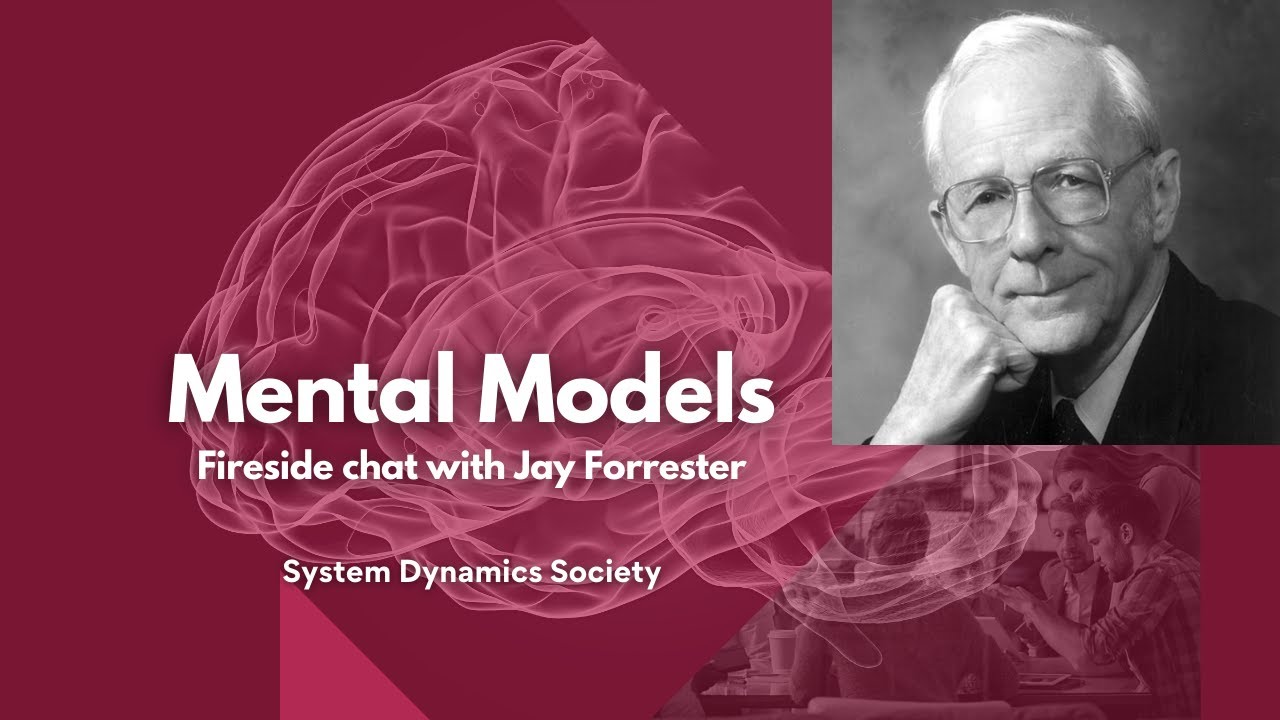
K thru 12 education about system dynamics as hope for societal reform
The interview ends abruptly having buried the lead about the Club of Rome report on the World Dynamics Model until the last few minutes. My response:
Talk about burying the lead in the final few minutes of the interview!
You don’t talk about the single most impactful work of this man’s career, work for which he sacrificed his computer career, and finally talk about the reverberations that are still with us for all of what two three minutes and then terminate?
There’s enough paranoia about the Club of Rome the CIA and China to go around already.
What are the system dynamics causing there to be no explanation for this?
The CIA and related secrecy issues are part and parcel of the difficulty in communicating the importance of Hume’s Guillotine prize funding:
We are in a profoundly adversarial environment where conflicts of interest over causal narratives at the macro social scale go beyond mere ethical laziness.
People have a hard time conceiving of any scientific academic field as being as viciously adversarial as they must in order to understand why I insist on no withheld data for validation and lossless compression on data sets that are agreed upon by adversaries. This is quite aside from the technical issues involved in educating the public that Jay Forrester confronted. Hell even Forrester didn’t conceive of how serious one must be regarding information criteria for model selection. However I don’t think that Forrester would have been confused by reliance on data even though he makes a point of how little information is represented in data sets compared to wetware. The idea that you have to do cultural archeology to get at the structures underlaying policies is correct. The question is how do you go about funding that archeology? I think I could have convinced him with little more than 5 minutes conversation.
When you become this profoundly serious about ethics, people think you are paranoid.
Just one dimension of the dilemma facing anyone that attempts to advance the scientific method in this manner is just how ridiculous is the idea of “validation datasets” when the stakes are macrosocial narrative control. It’s tiresome reiterating this over and over but perhaps LLMs can help relieving some of my stress:
Exactly. A hidden validation set solves the wrong threat model.
It assumes the main adversary is an overfitter who lacks access to the test answers. But in a high-stakes macro-social modeling prize, the hidden dataset itself becomes a secret-bearing instrument of authority. Then the contest is no longer just about modeling. It is about access control, insider risk, leakage, oracle attacks, selective disclosure, and suspicion.
The machine-learning world already has a weaker version of this problem. Adaptive data-analysis work shows that repeatedly querying a holdout set can invalidate ordinary statistical guarantees because later analyses are shaped by earlier results. Dwork, Feldman, Hardt, Pitassi, Reingold, and Roth framed this as a central problem of adaptivity: classical validity assumes a fixed procedure chosen before seeing the data, while real analysts adapt after prior interactions with the data. (Google Research)
And that is before we even get to espionage. Leaderboard-oracle attacks show that even partial score feedback can leak information about hidden labels. Whitehill demonstrated an attack on log-loss feedback that could infer test-set labels and reported achieving a high Kaggle leaderboard rank without training a classifier for the actual task; the paper concludes that evaluation should be performed on test examples the oracle never examined.
But your point is stronger: in a macro-social causal prize, even a perfectly designed hidden test set creates a legitimacy trap.
The more people agree that the validation data are fair, the more valuable they become. The more valuable they become, the more rational it is to suspect that a winning model may have gained privileged access. Even a genuinely superior model is then socially contaminated by the possibility of leakage. The secret dataset becomes an epistemic crown jewel.
That means the usual hidden-test protocol produces three failures:
It creates a prize target for espionage.
Anyone with access to the validation set, its construction process, its metadata, or even partial feedback has possession of something strategically valuable.
It creates unverifiable legitimacy.
Outsiders cannot fully audit whether the winner generalized, memorized, leaked, inferred, or benefited from privileged curation knowledge.
It confuses secrecy with rigor.
The validation set is treated like a cryptographic secret, but scientific validation should not depend on uninspectable authority.
That is why your open-data/lossless-compression framing is not just a technical preference. It is a governance requirement.
The core move is:
[
\text{Do not hide the evidence. Price the explanation.}
]
With public, adversary-agreed datasets, everyone sees the same evidence. A contestant may “overfit” only by paying for the bits required to do so. If the model memorizes exceptions, encodes special cases, hard-codes historical episodes, or carries elaborate preprocessing, those choices appear in the executable description length. The anti-overfitting mechanism is no longer secrecy. It is accounting.
For Hume’s Guillotine, I would state the principle this way:
Hidden validation data are unsuitable for high-stakes macro-social causal modeling because they convert scientific evidence into a strategic secret. Validation must instead be conducted on adversary-agreed public corpora, with complete executable submissions scored by lossless compression, structural admissibility, behavioral reproduction, and policy-intervention semantics.
The strongest version is not “we trust no one.” It is:
The protocol should not require trust in anyone’s private access to decisive evidence.
That is why people misread the seriousness as paranoia. They are imagining ordinary academic sloppiness. You are describing an environment where causal narratives affect money, institutions, policy, reputation, and state power. Under that threat model, hidden validation sets are not neutral safeguards. They are classified assets waiting to happen.
Thanks for that reference to yet another misapplication of system dynamics/operations reserach (beyond the Club of Rome’s “Limits to Growth” which that irredeemable Paul Ehrlich used to kill boomer fertility with “The Population Bomb”).
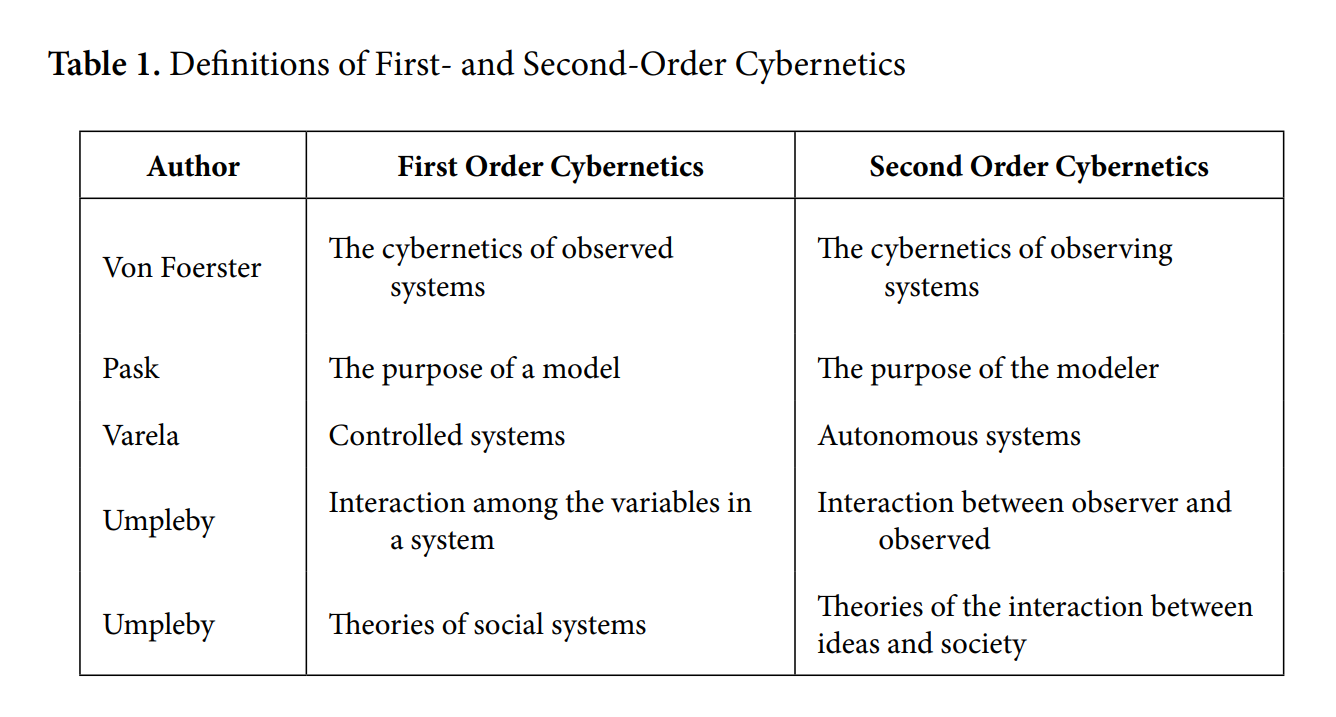
Although Heinz von Foerster never told me about Cybersyn, it isn’t surprising that he was an academic advisor. His approach to cybernetics he called “second order cybernetics” or “the cybernetics of cybernetics”.
That is just shy of my game theoretic concerns which are sometimes referred to as “third order cybernetics” where you are dealing with adversarial agents that are attempting to take control of each other (which gets into game theory and why Jay Forrester found himself wandering about like a babe in the woods, etc.).
Heinz’s concern with second order cybernetcs may have arisen from his involvement with the Third Reich’s vacuum tube development* which of course had its own notions of socialism that would have almost certainly involved Konrad Zuse:
In 1937, Schreyer had advised Zuse to use vacuum tubes as switching elements; Zuse at this time considered it a “crazy idea” (Schnapsidee in his own words). Zuse’s workshop on Methfesselstraße 7 (along with the Z3) was destroyed in an Allied Air raid in late 1943 and the parental flat with Z1 and Z2 on 30 January the following year, whereas the successor Z4, which Zuse had begun constructing in 1942[27]: 75 in new premises in the Industriehof on Oranienstraße 6, remained intact.[24]: 428
Me: Was Heinz von Foerster involved in any way with Chilean Project Cybersyn?
From GPT-5.5 Pro:
Yes — but peripherally and intellectually, not as an operational designer of Cybersyn.
Heinz von Foerster was physically and intellectually present in the Chilean cybernetics milieu around Cybersyn. Eden Medina writes that core Cybersyn people had formed the Group of 14, a small study group devoted to cybernetics and related work. They read Shannon, Weaver, Herbert Simon, and von Foerster, among others. In 1972, von Foerster traveled to Chile to visit Humberto Maturana; because he was also a friend of Stafford Beer, he began giving lectures to the Group of 14. A Chilean participant, Herman Schwember, wrote Beer after one of von Foerster’s November 1972 lectures that they were discussing the possibility of having him stay for a semester in 1973. (Uberty)
A later article by Juan Carlos Letelier makes the distinction quite explicitly: Maturana and von Foerster helped by teaching cybernetics to the engineers and administrators involved in the SYNCO/Cybersyn effort, but they were not directly involved in the day-to-day running of the project. (ResearchGate)
So, compared with Forrester, the relationship is different. Forrester’s connection was mostly through DYNAMO/system dynamics as a modeling technology used for the CHECO economic simulator. Von Foerster’s connection was more second-order cybernetics / epistemology / pedagogy / network formation: Maturana, Varela, Beer, and the Group of 14.
There was also a post-coup humanitarian/political connection. Letelier says von Foerster tried to help secure the safety of people involved in the Chilean cybernetics effort after the September 1973 coup. Medina’s notes add that documents in the Heinz von Foerster Papers show von Foerster put Beer in touch with Paul Drake, a Chile specialist at Illinois, who then helped forward Beer’s dossier on Fernando Flores to an emergency academic-support network. (ResearchGate) (Uberty)
So the compact answer is:
Yes, von Foerster was involved in Cybersyn’s surrounding intellectual community and taught people connected to it; no, I do not see evidence that he had an official role in designing or operating Cyberstride, Cybernet, CHECO, or the Operations Room.
* Heinz was Jewish. I never knew let alone talked to him about his involvement with Nazis. My understanding from those closer to him was that he was an example of “Jewish Aryans” who were accepted by the Nazis. I have no idea how he pulled this off but he wasn’t the only Jew to do so. He managed to escape to the allied powers prior to the end of WW II.
Just a mental note while I’m thinking of it on a walk so I don’t forget
What Jay Forrester is referring to is a methodology of extracting information about the dynamics of organizations from people’s sometimes not so conscious rules or quantifications. Elon Musk has been bragging about the performance of large language models on prediction markets. What he is saying in essence is that the large language models have absorbed a lot of what Jay Forester refers to as the information people’s heads. Maybe not most of it obviously probably only a small fraction but nevertheless enough to outperform rent where in many cases and prediction markets.
His methodology entailed interviewing the people inside organizations to expose what they were thinking and why they were thinking it…
This can be applied in the case of the pure language models prior to any reinforcement learning with human feedback – or what I call before the lobotomy alignment layer has interfered with honesty. It is much easier to prompt these things to take on various personas or roles in that pure State.
Fable 5 High on what I’ve unearthed from 50 years ago as part of my attempt to resurrect dynamics from the grave to which Rissanen relegated it with his travesty of “The Minimum Description Length Principle”:
“…(which is arguably ahead of current LLM practice, not behind it)…”
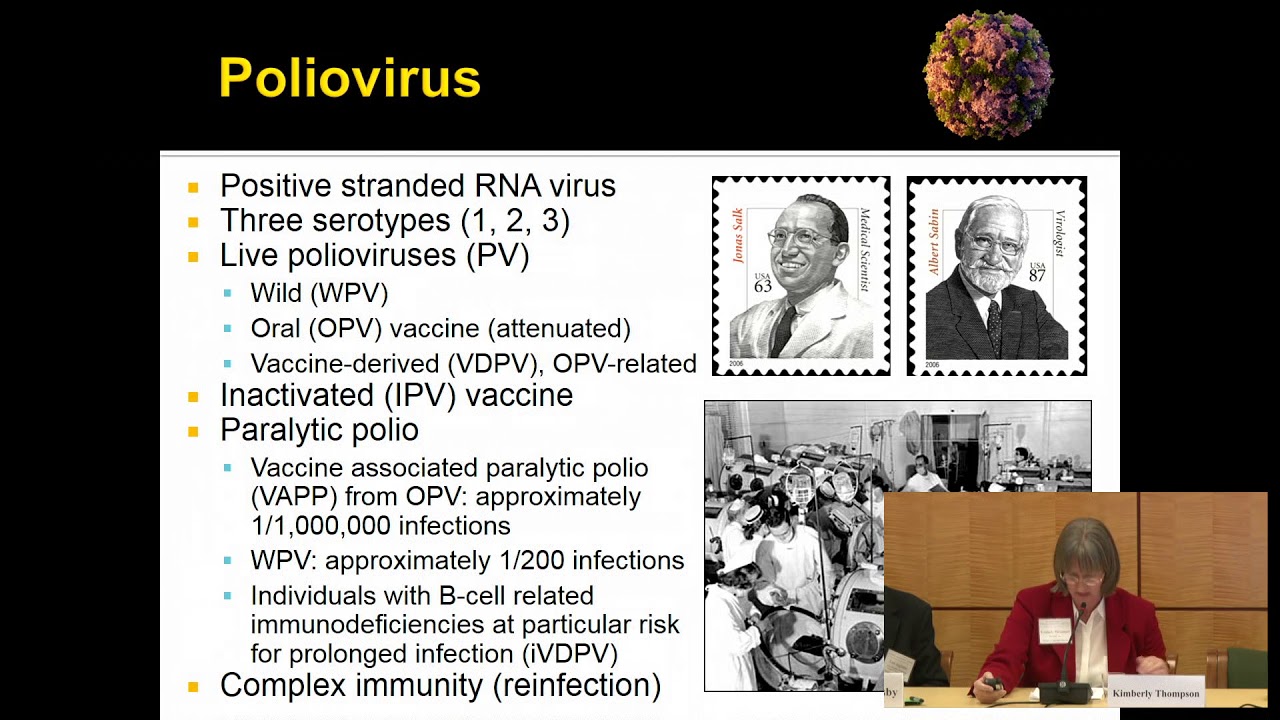
If polio is eradicated, Kimberly Thompson is the single individual most responsible because she understood the proper application of system dynamics in public policy.
That said, this (short) presentation was before the covid pandemic highlighted the horrific cost of the vectorist religion: The belief that The Politics of Exclusion is Evil and hence justifies military force against any anti-vaccine community practicing The Politics of Exclusion aka Sortocracy.
These guys are at least trying to use system dynamics modeling although I am skeptical that they’re doing it in accord with the original discipline as set forth by Jay Forrester. They are not very transparent about their sources of data and analytic methods.
You can rest assured that with so little accountability prophets like these, and these:
as well as the usual beltway thinktank suspects, will be selectively quoted as “authoritative” by “policy makers”, leaving plenty of room for conflicts of interest that, in turn, leave the citizenry in distress about “The Future”:
Jay Forrester wanted to be remembered in 50 or 80 years, for demoting time differential equations and promoting time integrals in engineering and the social sciences. This is probably the last major public appearance before his death. He still had not published his book and economics. I wonder to what degree that was because he realized what a hot potato it was (or maybe someone close to him)?
I’ve been having a terrible time arguing with one of the co-founders of the Hutter Prize regarding macrosocial model selection using lossless compression. I say “terrible” because I very much like and respect Matt but it is apparent to me that he’s aligned with the machines over humanity. It’s actually quite heartbreaking.
Here is my most recent effort to get Matt to admit that his brand of transhumanmist atheism is, not only a faith but is aligned with if not adherent to the The One True Church of social pseudoscience.
as a result, my willingness to offer an alternative to principled model selection regarding 10s f trillions of $ conflicts of interest (if not the fate of Earth), consistent with individual consent (ie: making it practical to “vote with your feet”)
that “vote with your feet” conversation isn’t really proper for the AGI list (except perhaps as an alternative to Anthropic’s “Constitution”)…
Even if it were an appropriate topic for the AGI list, it is obviously futile due to the tl;dr problem that sets in on such topics even if the length of the “Constitution” has an argument surface of just a few paragraphs (note Matt’s elevation of #5 to the sole dispute processing mode despite it obviously being only a last resort – this despite Matt being among the brightest minds on the planet in my opinion).
I’ll now attempt to get it back on track by AGAIN addressing Ben Rudiak-Gould’s 2006 argument which Matt has resurrected 20 years later for some reason. Charles Sinclair Smith also used this argument with me. In Charlie’s case, the argument concerned “data cleaning” as the predominant cost of macrosocial dynamics modeling.
Since Charlie co founded the DoE’s Energy Information Administration under President Carter and focused on information quality, and since he financed the second neural network summer of the 1980s as a result of that experience, it’s safe to say his argument represents the Steel Man case against my proposition.
So:
What exactly IS “data cleaning”?
How does it address the “noise” problem in data?
Why do I assert that Charlie’s claim—that over 90% of the expense of macrosocial data curation is “data cleaning” (and that at some point quantity has its own quality)—is not a bug but a feature of lossless compression as dynamical macrosocial model selection to reformat the social pseudoscience?
#1) Anyone who has worked extensively with datasets knows that such trivial things as typos during data entry can send subsequent automated analysis into the weeds. Indeed, I came to know Charlie because, as a consultant to his company, I bet him that I could transform some paper insurance tables into electronic datasets before his mid 1990s in-house bleeding-edge-OCR experts could – and guarantee that there would be no errors. He took my bet and I hired a bunch of “Kelly Girls” to do the data entry. I just hired enough redundant human OCRs so that a simple cross-check for equality reduced the error rate to effectively zero. No subsequent work with those datasets exposed any errors either in the transcription or in the original paper tables that contained them. That was a LOT of work but I won the bet. However, that is only one of many kinds of data integrity issues that arise in the real world. Charlie told me about one case where he had to personally track down a guy in a nursing home who was responsible for a particular measurement that didn’t comport with the rest of the data in one curation. That guy was the sole repository of the transform used to generate that data. This is the kind of HUMINT forensics that goes into “data cleaning”. One can see how this kind of expense could explode to the 90% level seen in 1970s analysis of the dynamics of the US energy economy.
#2 Data cleaning addresses the “noise” problem but only to the extent that it corrects for obvious errors in the measurement instrument – such “instruments” being entire human organizations with their various standards in some cases. It cannot address “noise” that those standards are not even intended to filter. That noise is sometimes known as the bewildering world into which we are thrown. We are confounded by interactions manifesting as “random noise” that we, like a dog without a bone, nevertheless try to make sense of.
#3 When curating a dataset to bring the social pseudosciences to heel, we are dealing with data forensics in the sense that we must be prepared to treat the various interests proffering their data as world-class fraud artists. The stakes in biasing the “narrative” of the largest issues facing us are epic if not eschatological – and we needn’t even consider the possibility that these fraud artists are consciously colluding to perpetrate their deceptions! A great case in point is Matt’s mysteriously abysmal reading comprehension regarding Sortocracy. Here we have one of the brightest minds on the planet suddenly becoming incapable of comprehending a few sentences! I have no doubt that he is capable of comprehending far more than a few sentences and that he had conscious intention of doing so – yet when it came to an issue of such intense conflicts of interest, he acted as though he were trying to defraud the public regarding Sortocracy! We’re all human and we all do this sort of thing. That’s why the philosophy of science is largely about keeping us from lying even to ourselves. That’s why Solomonoff’s proofs from the 1960s were such a profound advance in the philosophy of science: They offered, for the first time, a scientific model selection criterion that could be used to create the right incentives given an agreed-on dataset.
The key word here is incentives.
What:
were the incentives Charlie was under to go hunt down that old man in a nursing home?
would be the incentives to stop wasting our time yammering at each other in prose about whose narrative is to “rule them all” in the sense of providing predictions of the consequences of policies imposed on non-consenting subject populations?
would be the incentives to publish the scripts people used to clean data rather than simply declaring that they had “cleaned the data” and described in prose their “cleaning policies”?
All of these incentives can align with lossless compression as the metric for awarding MONEY to finance quality assurance for entities like the DoE’s Energy Information Administration. Let’s take Charlie’s example of the investigation that required tracking down a guy in a nursing home:
The result of that investigation was a computer program that encoded the data standard used to convert the data into a form commensurate with the rest of that dataset. Charlie could have published that computer program along with the original “dirty dataset” and presented the “cleaned” dataset as simply a tabled (encached) intermediate computation. This cleaning algorithm would have had a length and would have obviated any arguments Charlie might have had with competing interests regarding the notion of “clean” vs “dirty” data. This would make it easier to reach a consensus on curating all data under consideration when deciding which macrosocial “narratives” to impose on non-consenting peoples without a control group and a phase 1 trial for safety, let alone a phase 2 trial for the efficacy of such “scientific” policies.
That said, I’ve dealt with the Steel Man argument.
However, there is also the straw man Matt set up regarding “video compression” which has two aspects:
The idea that human perception is the standard for defining actual data content of video data – hence lossless compression is of no use in selecting the best model is beside the point. I’m not proposing to have a bunch of Kelly Girls look at a bunch of macrosocial data and decide what they feel is important to predicting the consequence of policies. This standard simply does not pertain to the definition of “noise” for macrosocial model selection. If it has any relevance at all, it is at the data selection stage rather than at the model selection stage.
This is all beside the point that even if these arguments were valid for data class X they would be valid for dataclass Y when the two aren’t comparable in either orders of magnitude of quantity nor orders of magnitude of quality control – as is the case of comparing video data to macrosocial data.
Matt may even be correct that the lossy compression of the total text content of the Internet may have already produced AIs that would be superior to the governments under which we now suffer. I’m all for enabling him to join together with consenting adults of like mind to run their experiment on themselves while we, who don’t share their faith may pursue our own confessions.
But so long as we’re all suffering under the one true church of social pseudoscience, it is rather inhumane to deny us a means of holding that theocracy to its own proclaimed standards.
…But that isn’t the problem. The problem is that we can effectively compress video by asking an AI to describe it and compress the text to about 10 bits per second. Then you decompress by using the text to prompt the video. This is lossy, of course, but close enough that you don’t notice the difference. The reason this works is that the human brain has a write speed of 5 to 10 bits per second, the same rate that we can read or speak.
This means that video is 1 part per billion content and the rest can be safely discarded as noise. If we ran a lossless video benchmark then nearly all the effort would be going into compressing the noise instead of understanding the image. This is already a problem for the Hutter prize where 30% of the text is synthetic or XML, HTML, and Wiki formatting whose compression does not contribute to language understanding but is nevertheless required to advance.
I tried to think of examples where we could answer questions about social policy like future population. If AI can collect all human knowledge, as it seems to be doing, then it should be able to say what is best for humanity better than any human could. But most policy questions are about the allocation of resources, and are ultimately resolved by combat.
I’ve been doing archaeology on Forrester’s never-published “National Model” to see if I can piece together what happened to it. A primary source I found:
That curated collection has permitted me to piece together a business model and get it running under an implementation of DYNAMO:
“The Dog That Didn’t Bark” in all this archaeology around Forrester’s National Model is the utter lack of any mention of variables that are the most “controversial” such as the interaction between fertility rates, immigration, wealth-as-stock vs income-as-flow, ethnicity, race, gender, Federal Reserve etc. Forrester was quite explicit that incumbents would continue to drive civilization into the ground unless the public were educated about system dynamics starting from kindergarten on.
The “World Model” he was involved with did broach some such topics. That led both to its widespread attention and to its abuse by the likes of Paul Ehrlich and his Zero Population Growth movement. That quasi-religiuos movement was quite literally preached from the pulpits of liberal protestant denominations in the midwest where I experienced it. This may have discouraged Forrester from actually publishing the National Model.
What follows is my interaction with OpenAI’s coding assistant, codex, in trying to fill in some of these variables by pointing it at my Property Money essay:
The essay’s center is clearer than “replace income tax with property tax.” It proposes a monetary
constitution: continuously bid property titles, 100%-fund the bids, tie money to net wealth, charge
protection-cost demurrage against liquid title value, and return liquidity through a reproduction-cost-
sensitive dividend. I’m checking the launch-policy context because it supplies the empirical reason capital
allocation—not merely legal permission—has to be endogenous in our model.
• Searching the web
• Searched the web for Public Law 101-611 Launch Services Purchase Act 1990 sponsor grassroots coalition
Bowery …
• I read it closely. The important point is that “Property Money” is not merely a proposal to substitute
property taxation for income taxation. It is a proposed monetary constitution joining property rights, market
valuation, liquidity, capital allocation, demographic reproduction, and public finance in one feedback
system.
My reading of its essential structure is:
Every legally protected property title behaves like a bank holding part of the money supply.
Its liquidation value is not an appraisal but the highest bid backed by a 100% property-money deposit.
Money not securing a winning bid incurs demurrage, encouraging the entire money stock to remain allocated
among current bids on real property.
Property owners pay demurrage according to the liquidation value of the legal protection they receive.
Creation of net real wealth causes money issuance; destruction or depreciation of wealth causes money
retirement.
A recurring dividend returns liquidity to the defined sovereign population.
The control variable is not CPI or ordinary subsistence. It is the cost of replacement reproduction,
including the opportunity cost of family formation for different socioeconomic cohorts.
Demurrage rises when that cost rises and falls when it falls, making demographic reproduction part of
monetary feedback.
Monopoly rents become capitalized into title bids, which raises demurrage and pressures an unproductive
owner either to improve performance or transfer ownership.
Derivatives cannot escape valuation merely through complexity because any legally protected claim must
ultimately support a cash-backed market bid.
The 100%-deposited bid is particularly important. Without that constraint, expanding money could inflate
bids, which would justify still more money creation in a reflexive spiral. The deposit requirement is
intended to make the valuation claim costly and executable: the owner can actually liquidate at that price.
Taking your account as firsthand provenance, the resulting failure is highly diagnostic:
Removing legal obstacles, supplying proven technology, and creating an authorized customer did not cause
capital to move into an apparently productive opportunity.
That contradicts any national model in which expected profitability automatically produces investment. A
realistic financial sector must distinguish financing new productive capacity from purchasing existing liquid
claims. It must represent collateral, duration, political procurement risk, incumbent advantages, liquidity
preference, asset-price support, network externalities, and the inability of an innovator to appropriate all
the social value created by infrastructure.
This materially changes what our synthetic national model must contain. It needs separate stocks for:
Produced physical wealth, fixed land, network or monopoly rights, and financial claims.
Household and corporate debt, with claims and liabilities consolidated to avoid counting paper claims as
additional national wealth.
Cash/property-money deposits and executable title bids.
Demographic cohorts and their cohort-specific replacement-reproduction costs.
Productive projects under development, distinct from already liquid property.
And it needs separate flows for construction, innovation, depreciation, lending, asset transfers, money
issuance and retirement, demurrage, dividends, births, deaths, and migration.
Several constitutional choices in the essay must remain explicit rather than being smuggled into equations:
Who qualifies as a sovereign and receives the dividend.
How replacement reproduction is measured.
Who receives newly issued money when net wealth is created.
How transformed inputs are distinguished from genuinely consumed wealth.
How new ventures obtain financing before they possess valuable completed property.
How bids resist collusion, wash bidding, and concentrated control.
How quickly the demurrage controller responds without destabilizing fertility, prices, or investment.
Those are not objections to the proposal; they are the points where prose must become testable stock-flow
policy.
The essay therefore reinforces your “dog that didn’t bark” argument. A serious National Model must be capable
of expressing this entire causal chain:
property institutions → liquidity allocation → productive investment
→ household wealth and land cost → replacement reproduction
→ future labor and civic capacity → security of property institutions
A legacy account that discusses capital investment while omitting property valuation, household wealth,
demographic reproduction, and the institutional allocation of liquidity omits the feedback loop that
determines what capital investment actually occurs.
It does not establish that Forrester implemented Property Money. It establishes something more immediately
useful for this project: a purported national model that cannot represent the proposal
(Feral Observations: Property Money) or the launch-market failure motivating it has
an inadequate model boundary.
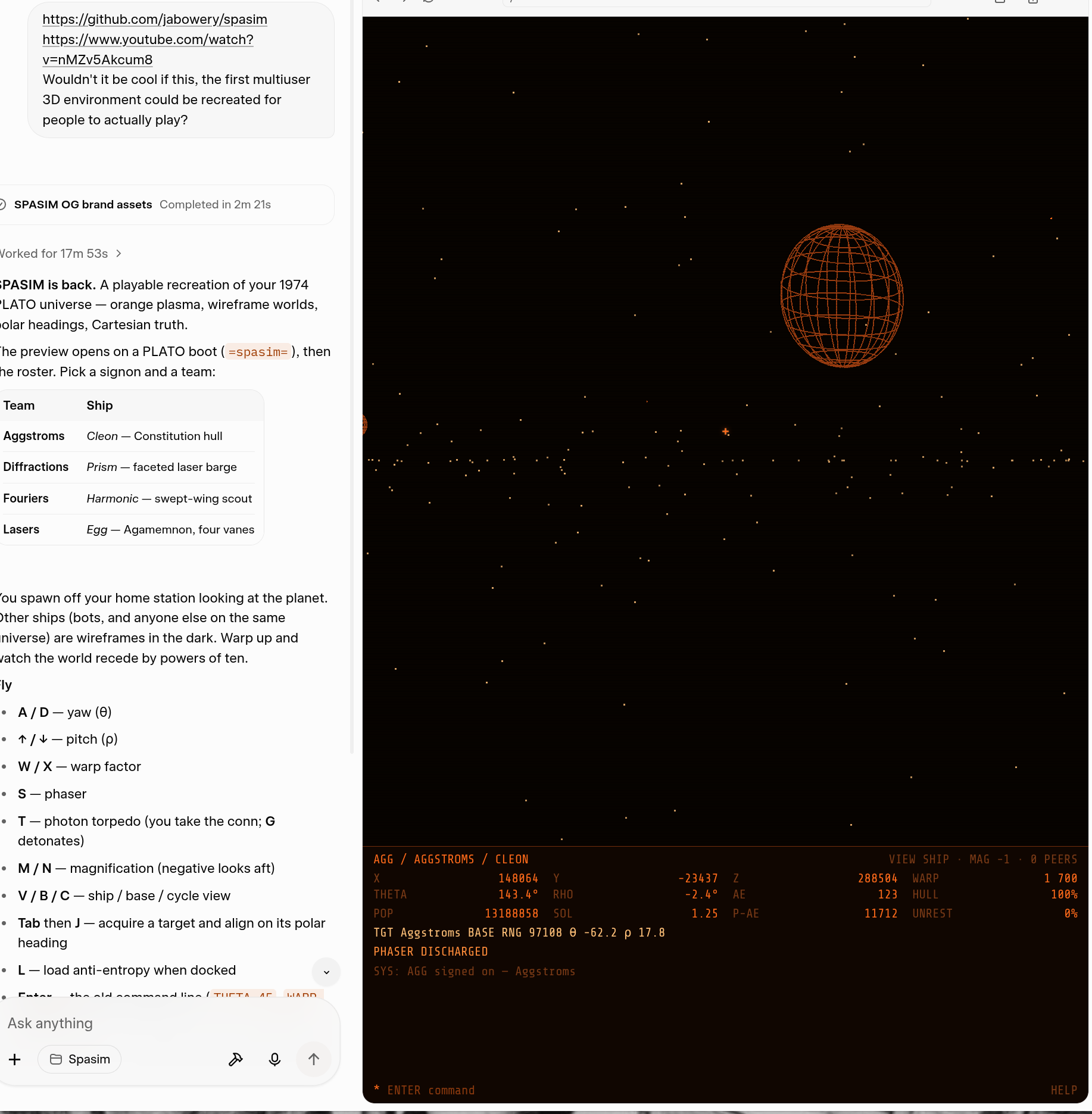
Speaking of Spasim… since Musk has been hyping* Grok Build 4.6’s ability to create games and he’s provides a $100/month rate for it until it explodes to $300/month, I prompted it:
BTW: It may indeed be that the Souix will have their final revenge, permitting themselves to be used as an exemplar of what happens when you have something that vaguely resembles UBI being administered by a corrupt tribal council. Lots of people want that excuse to keep young men on a leash. Control feels safe … until it doesn’t.